



Sep.08,2026
Below-ground insulation is exposed to conditions that are very different from above-ground building applications. Soil pressure, moisture, groundwater, freeze-thaw cycles, and long-term mechanical loading can all affect insulation performance.
For contractors, developers, civil engineering companies, and building-material distributors, selecting insulation for foundations, basement walls, floors, and underground structures requires more than comparing thermal conductivity.
Extruded polystyrene, commonly known as XPS insulation board, is one option considered for applications where moisture resistance, compressive strength, and stable thermal performance are important.
Underground structures are surrounded by soil rather than exposed air. This creates several additional challenges for insulation systems.
A below-ground insulation material may need to withstand:
Continuous contact with soil
Moisture and groundwater exposure
External mechanical pressure
Freeze-thaw conditions
Long-term compression
Irregular installation surfaces
Construction-site handling
A material that performs well inside a dry wall cavity may therefore not be the most suitable choice for an underground application.
For project buyers, the insulation specification should be based on the actual environment in which the material will operate.
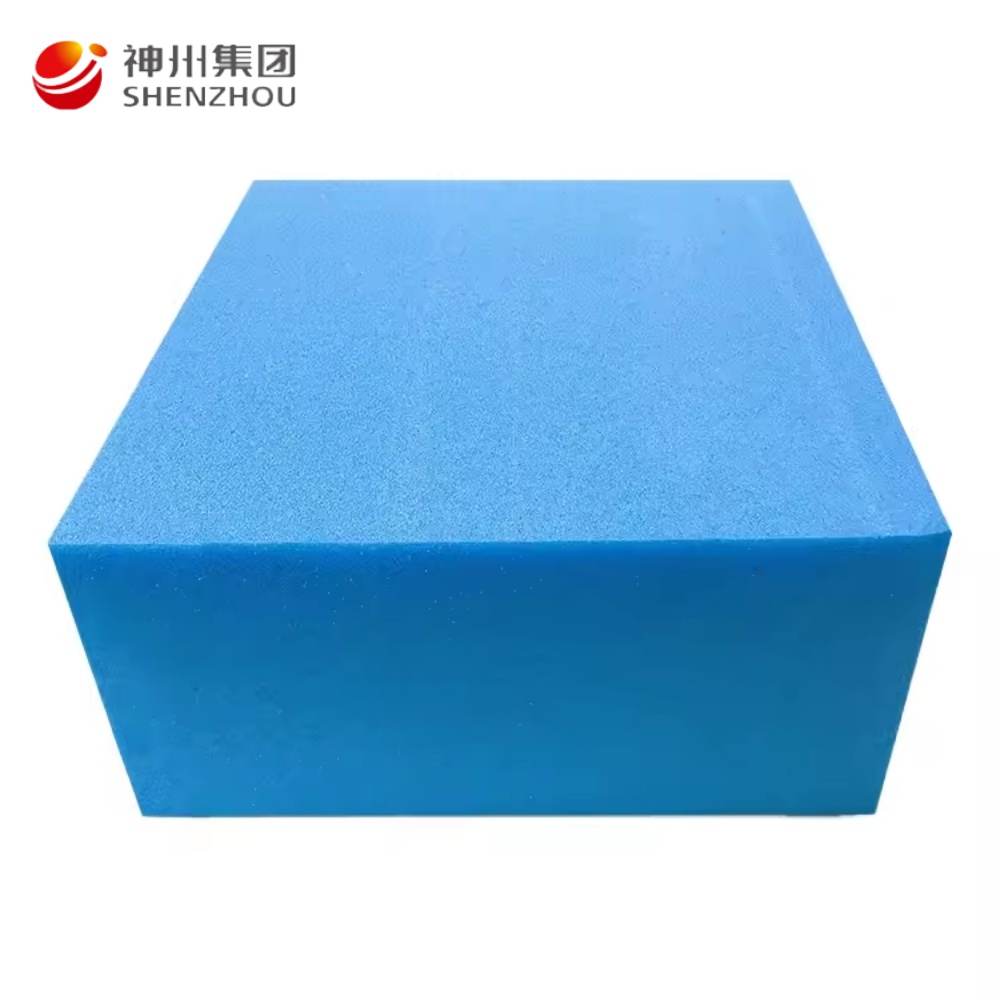
XPS is a closed-cell rigid foam insulation material with a relatively low water absorption rate and good compressive performance.
Its closed-cell structure can help limit moisture penetration compared with insulation materials that are more susceptible to water absorption.
This characteristic makes XPS a candidate for applications such as:
Basement wall insulation
Foundation insulation
Floor insulation
Underground structures
Inverted roof systems
Cold-storage floors
Perimeter insulation
Shenzhou currently lists XPS extruded polystyrene board as one of its insulation product categories, alongside glass wool, rock wool, rubber foam, ceramic wool, acoustic materials, and aerogel.
Moisture is one of the major concerns in below-ground insulation.
When insulation becomes wet, its thermal performance can change, depending on the material and exposure conditions.
Underground walls and floors may encounter:
Rainwater
Groundwater
Soil moisture
Condensation
Drainage failures
Seasonal water-table changes
XPS's closed-cell structure provides an advantage in environments where moisture exposure is expected.
However, XPS should not be treated as a substitute for waterproofing.
This distinction is important for construction buyers.
A below-ground wall may require a complete system consisting of structural concrete, waterproofing, drainage, protection layers, and thermal insulation.
XPS can contribute to thermal insulation within that system, but it does not eliminate the need for appropriate waterproofing and drainage design.
Underground insulation can be subjected to significant mechanical loading.
For example, insulation installed beneath a floor may experience pressure from:
Concrete slabs
Flooring systems
Equipment
Stored materials
Occupants
Soil loads
If the insulation compresses excessively, the thickness and thermal performance of the system may change.
Therefore, buyers should evaluate compressive strength and long-term dimensional stability rather than selecting XPS based only on thermal conductivity.
XPS can be installed as part of a basement thermal insulation system where moisture exposure and mechanical protection need to be considered.
Foundation insulation can help reduce heat transfer between the building and surrounding soil.
XPS can be used beneath or around floor systems where compressive strength is an important design consideration.
Insulating around the perimeter of a building can reduce heat transfer through the foundation zone.
Cold-storage applications require insulation with low thermal conductivity and appropriate mechanical properties because the insulation may be installed beneath heavily loaded floor systems.
The correct comparison depends on the application.
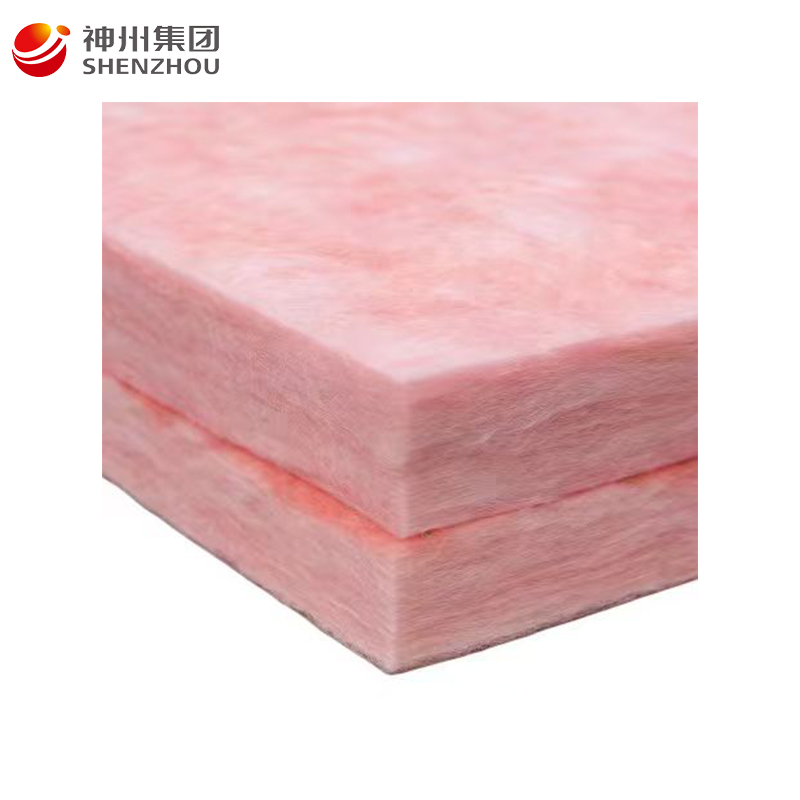
Glass wool is commonly used in walls, ceilings, roofs, HVAC systems, and other building applications.
XPS is a rigid closed-cell board and can be more suitable for applications where moisture exposure and compressive strength are major considerations.
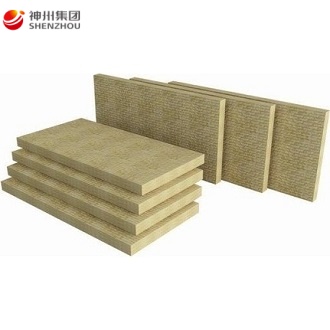
Rock wool is widely selected when non-combustibility and fire performance are key requirements.
XPS provides a different performance profile, particularly for moisture-exposed and load-bearing insulation applications.
Therefore, these materials should not be considered direct substitutes in every project.
Before purchasing XPS boards, buyers should review:
Thermal conductivity
Compressive strength
Water absorption
Board thickness
Dimensional stability
Edge configuration
Fire-performance requirements
Installation environment
Applicable building standards
The required specification depends on the actual application.
A basement wall, foundation, floor slab, and cold-storage floor may all require different XPS specifications.
Not necessarily.
Increasing insulation thickness generally increases thermal resistance, but the optimum thickness depends on the project's energy requirements, local climate, construction details, available space, and applicable building codes.
For large construction projects, the best approach is to determine the required thermal performance first and then select the appropriate XPS thickness.
XPS performance depends not only on the board itself but also on the installation system.
Contractors should consider:
Substrate preparation
Board alignment
Joint treatment
Mechanical protection
Waterproofing compatibility
Adhesive compatibility
Drainage
Backfilling procedures
Particular attention should be given to preventing unnecessary gaps between boards.
For below-ground applications, the complete wall or floor assembly should be evaluated rather than treating insulation as an independent component.
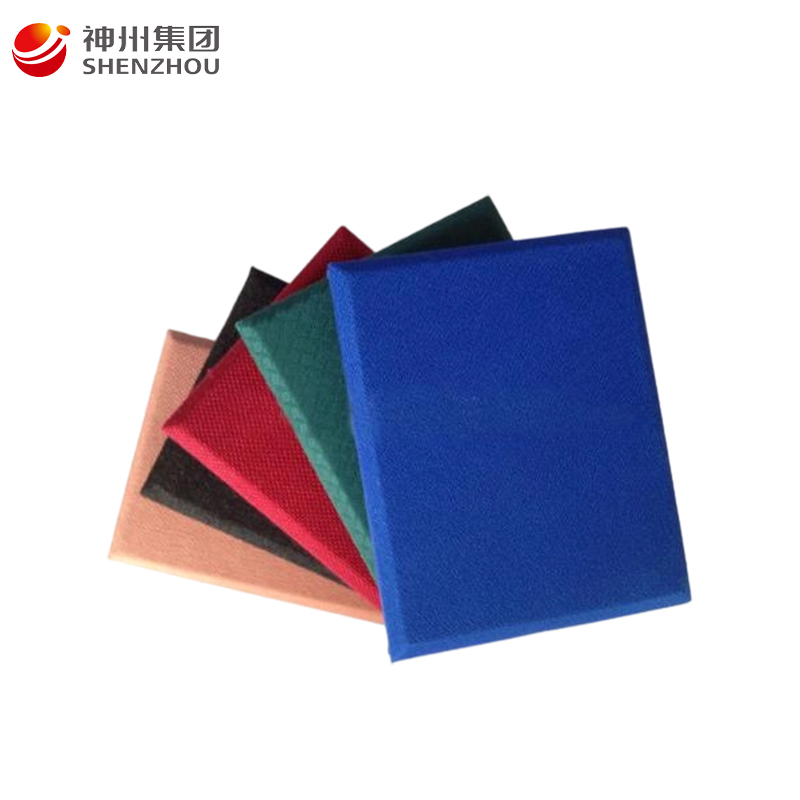
Shenzhou Energy Saving Technology Group provides a broad portfolio of thermal insulation and acoustic materials, including XPS boards, glass wool, rock wool, rubber foam, ceramic wool, acoustic panels, and aerogel insulation.
This allows construction companies, distributors, and engineering procurement teams to evaluate different insulation technologies according to application requirements.
Shenzhou states that the group has more than 40 years of industry production experience, 12 factories, and more than 100 certifications and global standards.
For projects requiring multiple insulation materials, working with a manufacturer with a broader product portfolio can simplify product sourcing and technical communication.
XPS can be considered for basement walls and foundation applications where moisture resistance and compressive performance are important. The complete waterproofing and insulation system should be designed according to project conditions.
Yes, XPS can be used in selected floor insulation applications. The required compressive strength and thickness should be determined according to the expected loading and thermal requirements.
XPS has a closed-cell structure and relatively low water absorption, but it should not be considered a replacement for a dedicated waterproofing system.
There is no universal thickness. The appropriate thickness depends on climate, building design, required thermal resistance, local regulations, and available installation space.
For basement, foundation, floor, cold-storage, and other below-ground projects, XPS selection should consider thermal performance, moisture exposure, compressive loading, thickness, and installation conditions together.
Email: qiu@shenzhoujt.cn
Website: www.shenzhougroup.com.cn
Contact Shenzhou with your application, required thickness, project quantity, and performance requirements to discuss an appropriate XPS insulation solution and request a quotation.