






XPS Board
XPS insulation is normally selected for parts of a building where thermal performance must be maintained under moisture exposure or compressive load. SHENZHOU offers rigid XPS foam insulation board for walls, concrete and steel roofs, cold storage floors, parking platforms, prefabricated buildings and selected infrastructure applications.
Our extruded polystyrene insulation board has a uniform closed-cell structure that combines low thermal conductivity with low water absorption and application-specific compressive strength. Available models range from X150 to X500, allowing contractors and project buyers to select the board according to expected load rather than relying on thickness alone.
For an accurate bulk quotation, contact SHENZHOU for technical confirmation.
The closed-cell structure limits water penetration and helps the board retain its insulation function in roofs, floors and below-grade areas. This makes water absorption an important purchasing parameter rather than a secondary product feature.
XPS foam boards are not selected only by thickness. The expected static and construction loads should be considered when choosing between X150, X200, X300 and higher-strength grades. Floors, parking platforms and infrastructure applications typically require closer load verification than wall insulation.
The rigid board format supports accurate cutting and regular installation layouts while remaining lighter than many conventional construction materials. Contractors should still confirm the required fixing method, joint treatment and protective layer for the complete building assembly.
XPS does not rely on an open fibrous structure for thermal insulation. Its closed cells provide moisture resistance and dimensional stability for applications exposed to damp conditions or repeated temperature changes.
XPS boards can be incorporated into wall insulation systems to reduce heat transfer and thermal bridging. Required thickness, fixing method, protective finish and fire detailing should be determined by the wall system design.
For roof applications, buyers should consider thermal resistance, moisture exposure, roof loading and the position of waterproofing layers. The selected XPS grade must be compatible with the complete roof build-up.
Cold storage floors require insulation that can resist moisture and compressive loading while reducing heat flow through the floor structure. Provide the floor load, operating temperature and required insulation thickness when requesting a recommendation.
Higher-compressive-strength XPS insulation boards can be considered for floors and platforms subject to greater loads. Selection should be based on engineering calculations rather than using density as the only performance indicator.
In selected infrastructure assemblies, XPS boards can help manage frost-related ground movement and thermal variation. Project specifications should define the required compressive strength, water absorption, dimensions and long-term loading conditions.
The rigid and lightweight board format is suitable for integration into prefabricated insulation structures. Board dimensions, joints and installation details can be coordinated with the modular construction layout.
XPS is most suitable where a rigid board, low water absorption and specified compressive strength are important. However, it is not the correct material for every insulation project.
View all SHENZHOU insulation products to compare material formats and applications.
SHENZHOU -Production Line
Application
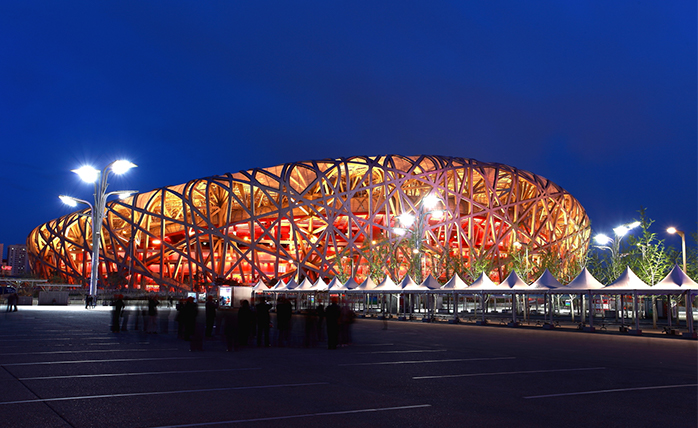
China National Stadium, also known as the "Bird's Nest," is an iconic structure located in Beijing, China.
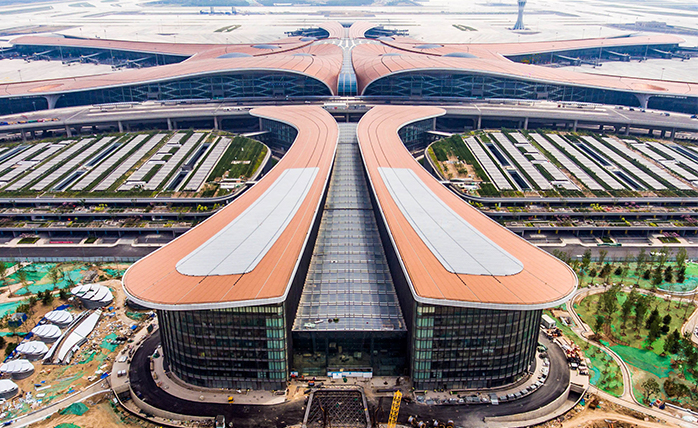
Beijing Daxing International Airport
Beijing Daxing International Airport,On December 26, 2014, the construction of the Beijing New Airport project began
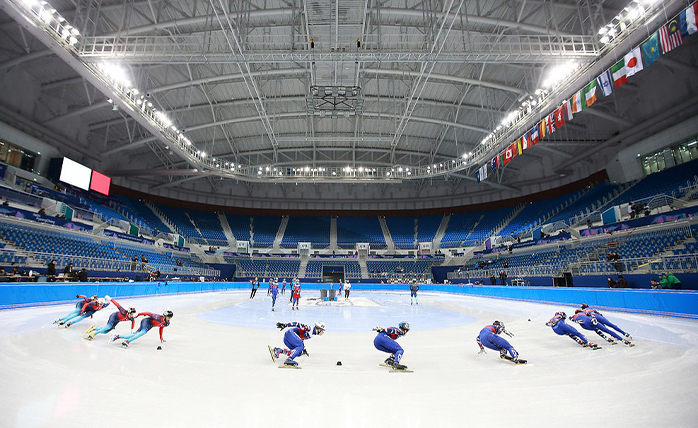
The 2022 Beijing Winter Olympics is a global sports event. As one of the important venues of the Winter Olympics, the National Speed Skating Oval carries important competition tasks.
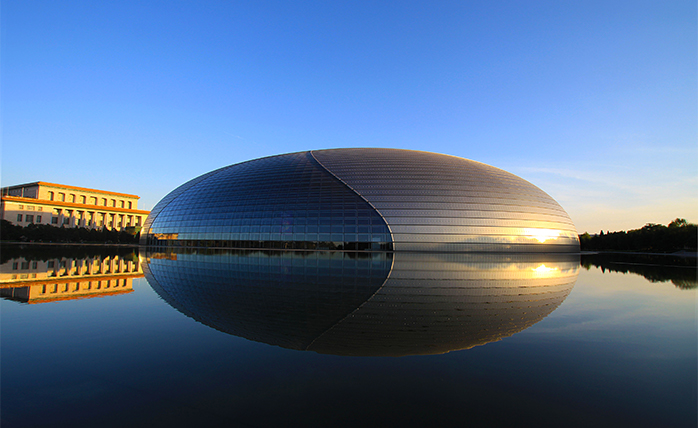
As one of the sixteen new scenic spots in Beijing, the landmark building - the National Grand Theatre - has a unique design.