



Aug.24,2026
Shenzhou | Reading time: 8 minutes
Rubber foam insulation — also called elastomeric foam or NBR/PVC insulation — is the flexible closed-cell material that protects HVAC pipes, ducts, chilled water lines, and refrigeration systems from heat loss and condensation. Its closed-cell structure gives it a decisive advantage over fibrous insulation: it resists water vapor without a separate vapor barrier, so it does not degrade when wet, and it remains flexible enough to wrap around bends and fittings in minutes. For HVAC contractors, mechanical engineers, and facility managers, specifying the right rubber foam — thickness, density, thermal conductivity, and fire rating — determines whether a chilled water system stays dry for decades or develops dripping condensation in its first summer. This guide covers the material, the performance specs that matter, and the application rules.
Rubber foam insulation is made from nitrile butadiene rubber (NBR) and polyvinyl chloride (PVC) through a precision foaming process that creates a uniform closed-cell structure. Millions of independent microscopic air bubbles, encased in rubber, form a physical barrier against heat transfer and water vapor. Unlike fibrous materials or open-cell foams, the closed cells reject moisture entirely — which means the material's thermal performance does not degrade over time as it would if it absorbed water. It is supplied as pre-slit pipe sections, sheets, and rolls, and performs across a broad temperature range, typically -40°C to +105°C (some grades -50°C to +110°C).
Four specifications determine whether rubber foam performs in a given application:
Thermal conductivity (K-value). The lower the K-value, the better the insulation. Quality rubber foam delivers approximately 0.030–0.037 W/(m·K) across its operating range (0.032 W/m·K at 0°C is a typical benchmark). Because the closed-cell foam rejects moisture, this value remains stable over the material's service life — the key difference from fibrous insulation whose performance degrades as it absorbs moisture.
Water vapor resistance. The closed-cell structure acts as a built-in vapor barrier, with a water vapor diffusion resistance factor (μ) of 10,000 or higher. This is what prevents condensation on cold surfaces — the primary reason rubber foam is specified for chilled water lines and refrigeration piping, where condensation control is a hard requirement.
Operating temperature range. Select the grade for the actual service: standard grades cover -40°C to +105°C, covering both deep-freeze refrigeration and hot water lines. Verify the grade against the operating temperature before ordering.
Fire rating. Rubber foam is flame-retardant; B1 rating (B-s2, d0, t1) is standard for commercial HVAC, with higher classes available for projects requiring Class 0 or FM-approved products. Confirm the fire rating required by the project specification.
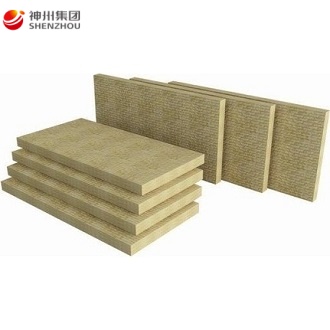
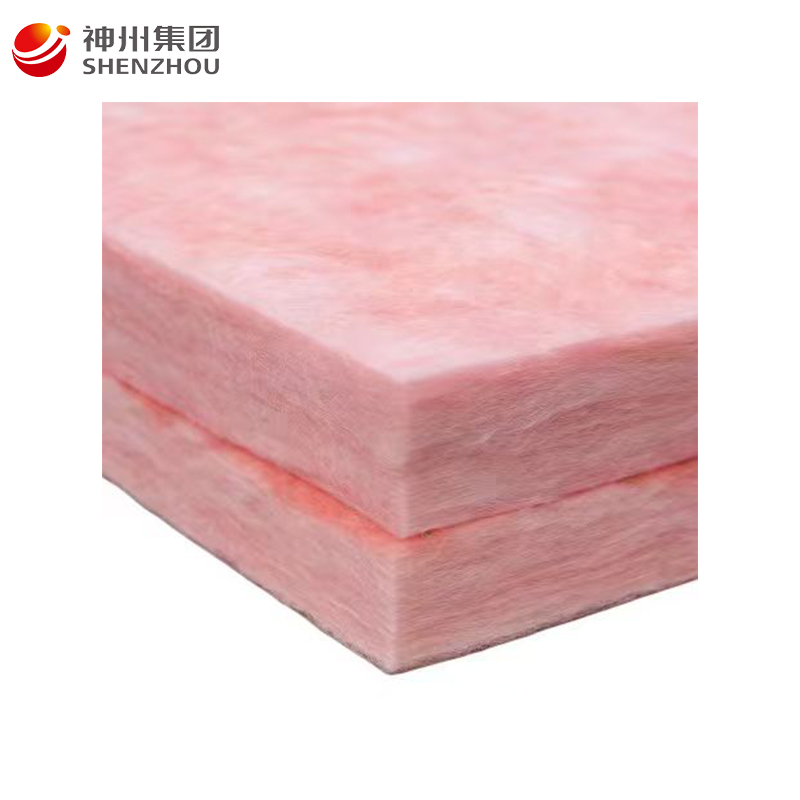
Rubber foam and fibrous insulation (glass wool, rock wool) are the two dominant HVAC insulation families, and they serve different roles:
|
Property |
Rubber foam (NBR/PVC) |
Glass wool / rock wool |
|
Thermal conductivity |
Lower (~0.032 W/m·K) |
Higher |
|
Moisture resistance |
Closed-cell, condensation-proof |
Absorbs water, performance degrades |
|
Vapor barrier |
Built-in (no separate barrier needed) |
Requires separate vapor barrier |
|
Flexibility |
Easy to wrap bends and fittings |
Brittle, labor-intensive to fit |
|
Fire resistance |
Self-extinguishing (B1/Class 0) |
Non-combustible (higher ratings) |
|
Service life |
10+ years, stable performance |
Longer if kept dry, degrades if wetted |
The practical division: rubber foam is the default for pipes, chilled water lines, refrigerant lines, and ducts where condensation control and ease of installation matter most. Glass wool and rock wool are chosen where non-combustibility and higher temperature ratings are required — for a detailed comparison, see our rubber foam vs glass wool insulation article.
Insulation thickness is not a default — it is calculated from pipe size, operating temperature, ambient temperature, and humidity. For chilled water and refrigeration lines, the thickness must be sufficient to keep the insulation's outer surface above the dew point, otherwise condensation forms on the outside of the insulation and drips. Key selection factors: ambient temperature and humidity at the installation site, pipe diameter, and the temperature of the fluid being carried. In high-humidity coastal environments and cold storage facilities, thicker insulation is required than in dry, temperate climates. The supplier should provide a condensation-control thickness recommendation for the actual site conditions rather than a generic thickness table.
Rubber foam performs as designed only when installed correctly. The rules that matter:
Rubber foam is available in formats matched to the installation: pre-slit tubes for standard AC copper pipes, VRV/VRF systems, and chilled water lines; sheets and rolls for large-diameter pipes, chiller tanks, and air duct networks; and integrated options with pre-applied adhesive backing, aluminum foil facing for UV protection, or double-layer construction. Choosing the format that matches the work saves significant on-site labor — pre-slit tubes cut installation time on pipe runs, while sheets suit large surfaces.
Shenzhou Energy Saving Technology Group Co., Ltd. is an energy-saving and environmental protection enterprise integrating R&D, manufacturing, and service of thermal insulation and sound absorption materials. The Group operates 12 factories across China, holds over 70 certifications and global standards, and produces six core product series — rubber foam, glass wool, ceramic wool, rock wool, XPS boards, and acoustic materials — with over 29 years of industry experience. Shenzhou's insulation materials have been specified in landmark projects including Beijing Daxing International Airport and the National Speed Skating Oval, and the complete product range supports HVAC, refrigeration, building, and industrial applications worldwide.
Contact Shenzhou with your pipe sizes, fluid temperature, and site humidity conditions to receive a condensation-control thickness recommendation and quote for rubber foam insulation.