



In the world of thermal and acoustic insulation, few questions generate more debate among engineers, contractors, and procurement managers than this: rubber foam or glass wool — which one should I specify? The answer, as with most engineering decisions, is that it depends entirely on the application. Choosing the wrong material can lead to condensation failures, fire safety violations, premature performance degradation, and costly remediation. Understanding the fundamental differences between these two widely used insulation materials — and the scenarios where each excels — is essential for anyone involved in HVAC design, building construction, or industrial insulation projects.
As a manufacturer of both rubber foam insulation and glass wool insulation, Shenzhou Energy Saving Technology Group brings an unbiased, application-driven perspective to this comparison. With over 32 years of manufacturing experience, 12 industrial parks, 80+ global certifications, and a project portfolio that includes the Beijing National Stadium (Bird's Nest), Beijing Daxing International Airport, the National Speed Skating Oval (2022 Winter Olympics), the National Grand Theatre, and the Robert Mugabe International Airport expansion in Zimbabwe, Shenzhou has supplied insulation materials for virtually every application scenario where the rubber foam vs glass wool decision arises.
1. Material Fundamentals: What You're Actually Comparing
Before diving into performance metrics, it is worth understanding what these materials are at the structural level — because the structural difference explains virtually every performance difference that follows.
1.1 Rubber Foam (NBR/PVC Closed-Cell Elastomeric Foam)
Rubber foam insulation is an organic, flexible elastomeric material manufactured from a blend of nitrile butadiene rubber (NBR) and polyvinyl chloride (PVC), processed through a chemical foaming process that creates a closed-cell structure. Each cell in the foam is an independent, sealed bubble. Water vapor, liquid water, and air cannot pass from one cell to the next. This single structural characteristic — the closed cell — defines rubber foam's entire performance profile: excellent moisture resistance, stable thermal conductivity regardless of ambient humidity, inherent flexibility, and reliable condensation control without requiring a separate vapor barrier.
1.2 Glass Wool (Inorganic Fiber Insulation)
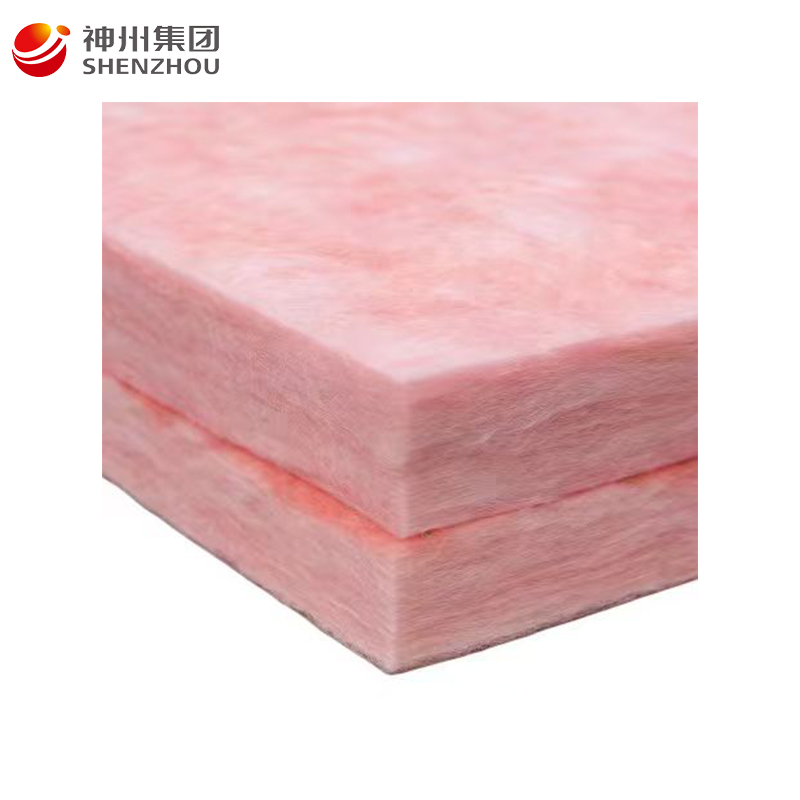
Glass wool insulation is an inorganic fibrous material manufactured by melting silica sand, limestone, and other minerals at temperatures exceeding 1,400°C, then fiberizing the molten glass through centrifugal spinning or flame attenuation. The resulting product consists of millions of intertwined glass fibers forming an open-cell, porous structure. Air trapped between the fibers provides thermal resistance — but the open structure also means that water vapor can penetrate freely. Glass wool's defining characteristics — Class A non-combustibility, excellent sound absorption, and low material cost — derive directly from its inorganic fiber composition.
| Property | Rubber Foam (NBR) | Glass Wool |
|---|---|---|
| Material Type | Organic elastomeric (synthetic rubber + PVC) | Inorganic fiber (melted and fiberized glass) |
| Cell Structure | Closed-cell — independent sealed bubbles | Open-cell — interconnected fiber matrix |
| Thermal Conductivity (λ) | 0.032–0.038 W/(m·K) | 0.032–0.042 W/(m·K) |
| Temperature Range | -40°C to 105°C | -20°C to 300°C (up to 450°C for some grades) |
| Fire Rating | B1 (flame-retardant, self-extinguishing) | Class A (non-combustible) |
| Water Absorption | Near zero (≦0.2% by volume) | High if exposed (requires vapor barrier) |
| Density Range | 40–80 kg/m³ | 12–48 kg/m³ (boards can be higher) |
| Thickness Range | 6–50 mm | 25–100 mm |
| Sound Absorption | Moderate | Excellent (NRC up to 0.95) |
| Flexibility | High — wraps around complex shapes | Low — rigid, cuts to fit flat surfaces |
| Service Life | 10–15 years | 8–12 years (dry conditions); much shorter if moisture penetrates |
Technical Insight: The single most important distinction between these two materials is the closed-cell vs open-cell structure. This one difference drives the rubber foam vs glass wool decision in nearly every real-world application. If the application involves moisture, condensation risk, or humidity — the closed cell wins. If the application involves high temperatures above 105°C, fire-critical safety requirements, or large-area low-cost coverage — the inorganic fiber wins.
2. Thermal Performance: The Numbers Don't Tell the Full Story
On paper, rubber foam and glass wool have similar thermal conductivity values — 0.032 to 0.038 W/(m·K) for rubber foam, and 0.032 to 0.042 W/(m·K) for glass wool, depending on density and mean temperature. At first glance, this suggests they are interchangeable from a thermal performance perspective. They are not — and here is why.
2.1 The Moisture Effect on Thermal Performance
Glass wool's thermal performance is highly sensitive to moisture content. Because its open-cell fiber structure allows water vapor to penetrate, any breach in the vapor barrier — from installation damage, joint separation, aging adhesive, or mechanical puncture — allows moisture to enter the fiber matrix. Once wet, glass wool's thermal conductivity increases dramatically. Industry data indicates that for every 1% increase in moisture content, glass wool's thermal conductivity rises by 3-5%. A glass wool installation on a chilled water pipe that absorbs just 3% moisture by volume can lose 10-15% of its insulating effectiveness.
Rubber foam's closed-cell structure eliminates this failure mode. The independent sealed cells prevent water vapor migration regardless of ambient humidity, maintaining stable thermal conductivity over the entire service life of the installation. This is why rubber foam is the overwhelmingly preferred choice for cold pipe insulation in humid environments — it simply does not suffer from the moisture-driven performance degradation that plagues open-cell fibrous materials.
2.2 Temperature Range and Thermal Stability
Where glass wool pulls ahead is in high-temperature applications. With a service temperature of up to 300°C (and specialized grades reaching 450°C), glass wool operates comfortably in environments where rubber foam would melt or decompose — industrial steam pipes, furnace linings, high-temperature ductwork, and boiler insulation. Rubber foam's upper limit of 105°C is sufficient for HVAC hot water and low-pressure steam applications but cannot serve genuine high-temperature industrial processes.
3. Fire Safety: The Regulatory Decision Point
For many projects, the rubber foam vs glass wool decision is effectively made by the fire safety requirements of the building code. This is where the two materials diverge most sharply.
Glass wool, being an inorganic material made from melted glass, is Class A non-combustible (per GB 8624 and ASTM E84 standards). It does not ignite, does not support combustion, and does not release toxic smoke when exposed to fire. This makes it the specified material — and often the only permitted material — for buildings with high fire safety requirements: high-rise residential and commercial towers, theatres, stadiums, hospitals, schools, and transportation infrastructure.
Rubber foam, as an organic polymer, achieves Class B1 flame-retardant rating. Quality formulations — such as those manufactured by Shenzhou Group — are self-extinguishing: when exposed to flame, the material chars on the surface without dripping molten material and self-extinguishes once the flame source is removed. For the vast majority of HVAC and general building applications, B1 is fully sufficient. But where building codes mandate Class A materials, glass wool (or rock wool) is the specified solution.
Fire Safety Summary: Class A non-combustible requirement → specify glass wool. B1 flame-retardant acceptable → rubber foam offers superior moisture resistance and installation flexibility. Shenzhou manufactures both, with full certification documentation. Shenzhou's glass wool includes formaldehyde-free and eco-friendly variants for projects with indoor air quality requirements.
4. Moisture and Condensation: The Silent Performance Killer
Condensation on cold pipe surfaces is not merely a cosmetic issue — it is a progressive insulation failure that degrades thermal performance, corrodes pipework, promotes mold growth, damages ceiling finishes, and creates indoor air quality problems. In HVAC systems, condensation control is often the determining factor in material selection.
4.1 Rubber Foam: Built-In Condensation Control
The closed-cell structure of rubber foam provides inherent condensation resistance without requiring a separate vapor barrier. Its water vapor diffusion resistance factor (μ-value) is in the range of 3,000-7,000, meaning water vapor passes through the material approximately 3,000-7,000 times more slowly than through still air. Combined with near-zero water absorption by volume, this means that a properly installed rubber foam insulation system will not accumulate moisture even on chilled water pipes operating below the ambient dew point in humid environments.
4.2 Glass Wool: Vapor Barrier Dependent
Glass wool's open-cell structure offers essentially no inherent resistance to water vapor diffusion. Its performance on cold pipe applications is entirely dependent on the integrity of the external vapor barrier — typically an aluminum foil laminate or polyethylene film applied to the warm side of the insulation. Every joint in this barrier must be sealed with pressure-sensitive adhesive tape, every penetration must be carefully detailed, and any damage during or after installation can create a moisture entry point. Once moisture enters the glass wool matrix, it condenses, accumulates, and progressively degrades thermal performance — and there is no practical way to dry it out in situ.
4.3 The Humidity Geography Factor
This moisture sensitivity means that glass wool's suitability for cold pipe applications is strongly dependent on geography. In dry climates (desert regions, high-altitude locations, heated indoor spaces with low relative humidity), a well-installed vapor barrier system can perform adequately. In humid climates — coastal Southeast Asia, the Gulf region, equatorial Africa, the southern United States, and Northern Europe's maritime climate — the long-term risk of vapor barrier failure makes rubber foam the clearly preferred engineering choice for chilled water, refrigerant, and cold water piping.
5. Application-by-Application Selection Guide
Drawing on Shenzhou Group's 32 years of project experience across both material families, the following application-specific recommendations reflect how the rubber foam vs glass wool decision plays out in real-world engineering practice:
HVAC Chilled Water Pipes
Choose rubber foam. Cold pipes operating continuously below dew point in unconditioned spaces demand the condensation resistance that only closed-cell insulation can reliably provide. No vapor barrier = no vapor barrier failure.
Industrial Steam Pipes (>105°C)
Choose glass wool. Rubber foam's upper service limit of 105°C excludes it from high-temperature steam applications. Glass wool's 300°C+ rating makes it the standard choice for steam and high-temperature process piping.
Refrigerant Lines (Split AC, VRF)
Choose rubber foam. Cold refrigerant lines in ceiling voids, outdoor runs, and mechanical rooms are the classic condensation-risk scenario. Closed-cell rubber foam is the industry standard here.
HVAC Ductwork (Supply & Return)
Choose glass wool. Large, flat rectangular duct surfaces in conditioned spaces favor glass wool's cost efficiency and Class A fire rating. Install with aluminum foil facing for a clean, durable finish.
Pipe Fittings, Valves, Elbows
Choose rubber foam. Flexible material conforms to complex shapes with seamless coverage — eliminating the thermal bridging and moisture entry points that rigid board insulation creates at irregular geometries.
Building Walls, Roofs, Cavities
Choose glass wool. For large-area thermal and acoustic insulation in dry building envelope applications, glass wool's combination of low cost, Class A fire safety, and excellent sound absorption (NRC up to 0.95) makes it the dominant choice.
Cold Storage & Refrigeration
Choose rubber foam. Continuous below-freezing operation with high ambient humidity on the warm side makes moisture migration the dominant failure risk. Closed-cell foam is the only reliable solution.
Acoustic Insulation (Theatres, Studios)
Choose glass wool. The open-cell fiber structure is a natural sound absorber, achieving NRC values of 0.90-0.95. Rubber foam serves primarily as a vibration damper and thermal insulator, not a broadband sound absorber.
Hospital & Cleanroom HVAC
Choose rubber foam. Hygiene-sensitive environments cannot tolerate fiber shedding. Rubber foam's closed, non-fibrous surface eliminates the risk of airborne glass fiber contamination in critical spaces.
Underground Parking & Plant Rooms
Choose glass wool. Large-volume spaces with fire-critical safety requirements and moderate humidity favor glass wool's non-combustibility and cost structure. Ensure adequate ventilation to manage ambient moisture levels.
6. Installation and Total Cost of Ownership
Material cost per square meter is a poor basis for insulation material selection — it ignores installation labor, required accessories (vapor barriers, cladding, adhesives, tapes), and long-term performance risk. A complete economic comparison must account for the full installed system:
| Cost Factor | Rubber Foam System | Glass Wool System |
|---|---|---|
| Material Cost | Higher per m² | Lower per m² (the lowest among all insulation materials) |
| Vapor Barrier | Not required — inherent to material | Required for cold applications — aluminum foil laminate or PE film, plus PSA tape for joints |
| Protective Cladding | Not required for indoor use; recommended outdoors (UV protection) | Required for exposed or mechanical-damage-prone surfaces — aluminum or galvanized steel jacketing |
| Installation Labor | Lower — flexible, self-adhesive options, fast cutting, fewer accessories | Higher — rigid, requires vapor barrier installation and sealing, protective equipment needed for fiber handling |
| Installation Speed | ~30% faster on pipe systems (especially with fittings) | Comparable on straight runs; slower on complex geometries |
| Long-Term Risk | Low — stable performance, no vapor barrier to fail | Moderate — any vapor barrier breach leads to progressive thermal performance loss |
| Maintenance | Minimal — cleanable surface, no special care | Periodic vapor barrier inspection recommended for cold applications |
Practical Experience: For pipe insulation systems in humid environments, rubber foam's total installed cost — when factoring in the avoided cost of vapor barrier materials, vapor barrier installation labor, protective cladding, and the elimination of long-term moisture-related performance risk — is often comparable to or lower than a properly installed glass wool system. For large-area straight ductwork and building envelope applications where vapor barrier failure risk is lower and material cost dominates, glass wool's cost advantage is significant and real.
7. Shenzhou Group: One Manufacturer, Both Materials, Unbiased Guidance
Shenzhou Energy Saving Technology Group Co., Ltd. is a comprehensive insulation manufacturer integrating R&D, production, and technical services for thermal insulation, sound absorption, and noise reduction materials. Headquartered in Langfang, Hebei Province — one of China's core insulation material production regions — Shenzhou operates 12 industrial parks across 10 factories, with six subsidiaries and a product portfolio spanning 66 lines across seven material categories.
What distinguishes Shenzhou in the rubber foam vs glass wool discussion is that the company manufactures both materials at scale. This means Shenzhou's technical team provides application-driven material recommendations based on what the project actually needs — not based on which material the company happens to sell. The product range covers:
-
Rubber Foam — NBR/PVC closed-cell elastomeric foam, self-adhesive options, B1 flame-retardant, for HVAC, cold storage, automotive, and industrial applications
-
Glass Wool — Pink, brown (eco-friendly), white (formaldehyde-free) formulations; batts, boards, and blankets; Class A non-combustible
-
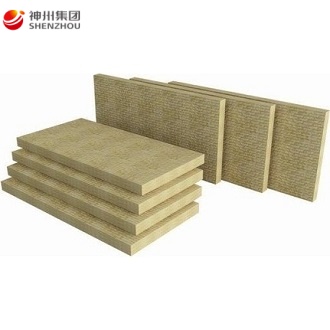
Rock Wool — High-temperature, fire-resistant, acoustic, for industrial and building applications
-
Ceramic Wool — Ultra-high-temperature (up to 1,260°C), for furnaces, kilns, and petrochemical applications
-
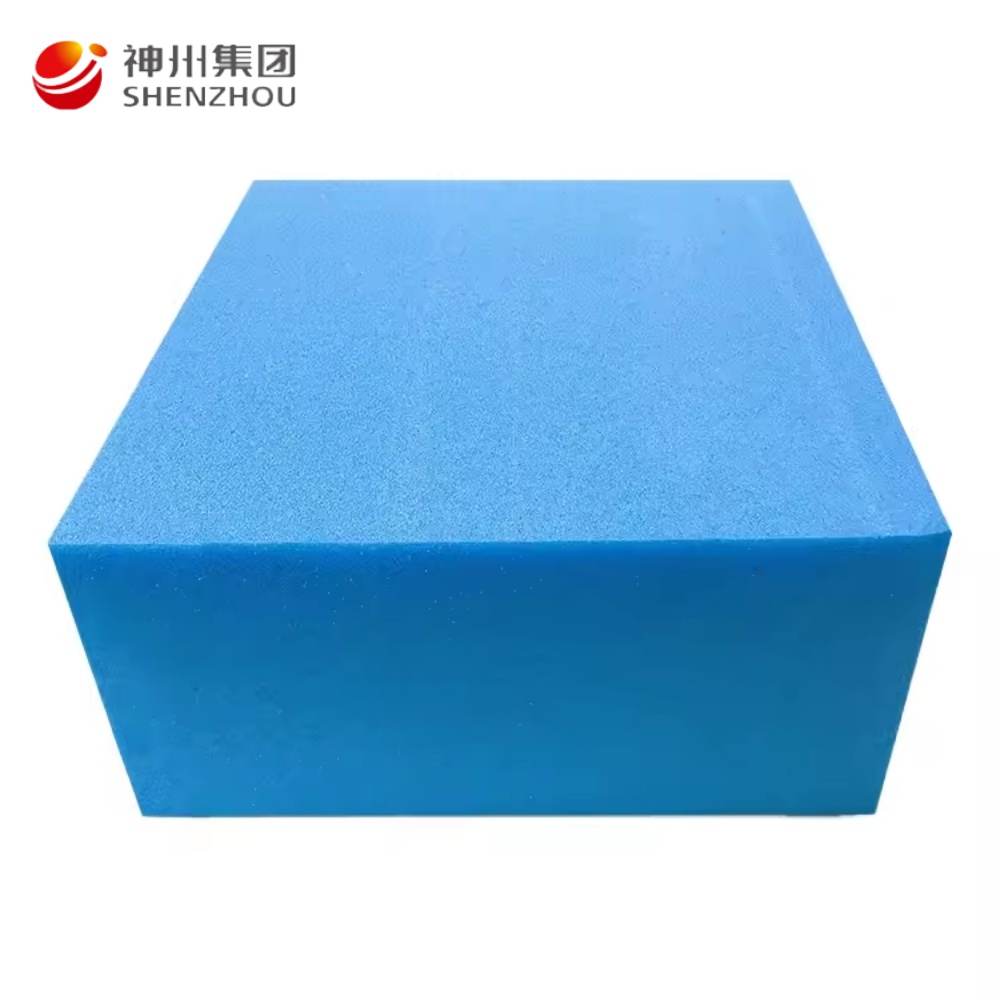
XPS Board — Rigid extruded polystyrene foam for building envelope insulation
-
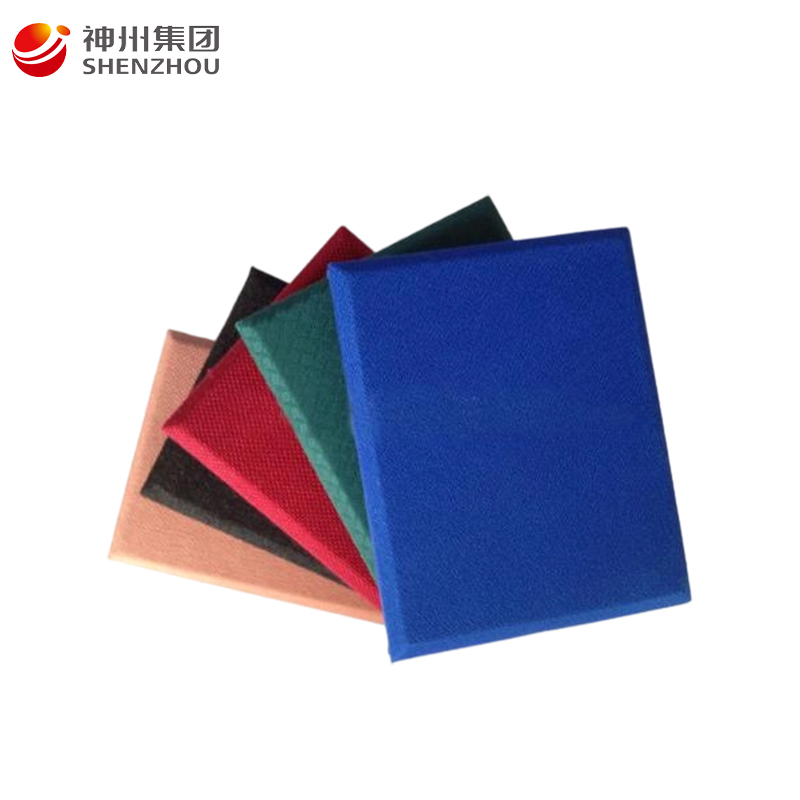
Acoustic Panels — Sound absorption and noise control solutions
Shenzhou products have been specified for landmark projects including the Beijing National Stadium (Bird's Nest), Beijing Daxing International Airport, National Speed Skating Oval (2022 Winter Olympics), National Grand Theatre, and the Robert Gabriel Mugabe International Airport expansion in Zimbabwe — demonstrating verified performance across the full spectrum of insulation application scenarios.
Not Sure Which Insulation Material Your Project Needs?
Send your project requirements — application type, operating temperature, humidity conditions, fire rating requirement, and budget — to Shenzhou's technical team. With 32+ years of experience manufacturing both rubber foam and glass wool, we provide unbiased, application-driven material recommendations.
Email qiu@shenzhoujt.cn for a Technical ConsultationPhone: +86 0316 526 6230 | Address: Liugezhuang Development Zone, Dacheng County, Langfang, Hebei, China
8. Frequently Asked Questions
Conclusion
The rubber foam vs glass wool decision is not about which material is better in absolute terms — it is about which material is better for your specific application. Understanding the fundamental structural difference between closed-cell elastomeric foam and open-cell inorganic fiber — and how that difference drives performance in moisture resistance, fire safety, installation complexity, and long-term reliability — enables informed specification.
With 32+ years of manufacturing experience, 12 industrial parks, 80+ certifications, and a project track record spanning Olympic venues, international airports, and national landmarks, Shenzhou Energy Saving Technology Group is uniquely positioned to provide unbiased guidance on this decision — because we manufacture both materials at scale, with equal depth of technical expertise in each.
Get Application-Specific Insulation Guidance
Contact Shenzhou's technical team for material specifications, thermal calculations, and project-specific recommendations — covering rubber foam, glass wool, rock wool, ceramic wool, XPS, and acoustic panels.
Email qiu@shenzhoujt.cnTel: +86 0316 526 6230 | Langfang, Hebei, China | 12 Industrial Parks | Global Delivery