



Oct.15,2026
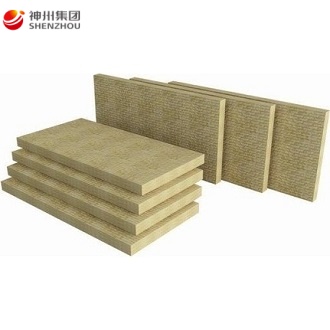
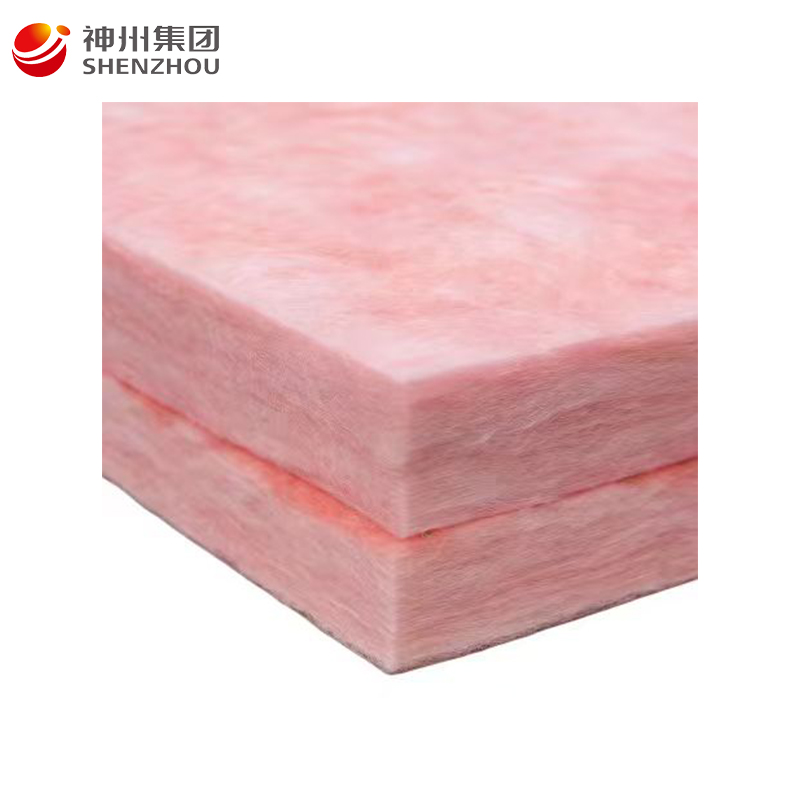
To read an insulation datasheet and Declaration of Performance correctly, start with the product identification and the declared values for thermal conductivity, reaction to fire and the applicable standard, then confirm that the test methods and CE or UKCA marking match your project's building code. If those three checks line up, the document is reliable enough to base a specification on; if any one is missing, vague or unverifiable, treat the product as not yet proven and request the full DoP from the manufacturer before you buy. The same reading method applies whether you are specifying Shenzhou glass wool for a façade system or Shenzhou rock wool for a fire-rated wall, and our insulation guides break each value down with worked examples.
A product datasheet is the manufacturer's own technical summary. It lists physical properties, recommended uses, packing formats and performance claims so a buyer can compare options and estimate cost differences. A Declaration of Performance, often called a DoP, is a different animal. Under the EU Construction Products Regulation 305/2011, and the retained UK law that mirrors it, any insulation that falls under a harmonised European standard or holds a European Technical Assessment must be backed by a DoP drawn up by the manufacturer.
The DoP is the document that unlocks CE marking in the EU and UKCA marking in Great Britain. Without it, the product cannot carry those marks and cannot be lawfully sold for construction use. In plain terms, the datasheet tells you what the maker wants you to know; the DoP proves, in a legally binding form, what the product actually achieves.
Open the DoP and look for a unique product identification code, the intended use, the manufacturer's name and address, the assessment and verification of constancy of performance system used, and the reference to the relevant harmonised standard or technical assessment. If the datasheet cites a standard but the DoP does not reference the same harmonised standard or assessment, that gap alone is reason to pause.
A correct DoP also carries a signed statement of responsibility from the manufacturer. That signature is what turns performance numbers into an accountable claim rather than marketing language.
Thermal performance usually appears as design thermal conductivity, written as lambda D or λD, thermal resistance RD, and whole-element U-value. These three are not interchangeable, and comparing them wrongly is the most common error buyers make.
Lambda D describes how much heat the material conducts at a defined mean temperature. Thermal resistance RD is the material's resistance to heat flow for a given thickness. The U-value belongs to the whole building element, not the insulation alone. When you compare two products, line up lambda D values measured at the same mean temperature and reported in the same units, because a figure taken at 10°C is not directly comparable to one taken at 23°C. The same warning applies across regions: European EN test methods and North American ASTM methods measure similar properties but are not always interchangeable, so check which method produced the number you are reading.
Reaction to fire is expressed in the EU and UK as a Euroclass from A1 to F under EN 13501-1, with A1 meaning non-combustible and F meaning no determined performance. For external walls and fire-rated assemblies this class is often the deciding factor, and it should appear on both the datasheet and the DoP.
Geography changes the language. The United States rates plenum insulation by flame spread and smoke development, typically a 25/50 index under ASTM E84, while Canada uses CAN/ULC-S102, a similar but not identical tunnel test whose results cannot be swapped for ASTM E84. A Euroclass and an ASTM flame-spread index describe different things and should never be read as equivalents. Always match the classification system to the building code that governs your site.
Beyond heat and fire, a complete datasheet covers water absorption, water vapour permeability, compressive strength, dimensional stability and acoustic performance. Water absorption and vapour permeability drive long-term moisture behaviour; compressive strength and dimensional stability matter where the insulation carries load or sits in a moving assembly; acoustic figures matter for party walls and suspended floors.
One trap worth flagging: if a product uses a facer or requires a separate vapour barrier, the published performance may include that facing. Ask for the data without the facer as well, because that is the performance you inherit the moment the facing is damaged on site.
The DoP is the foundation for CE and UKCA marking, and therefore for market access across the EU and Great Britain. Because every member state recognises a valid DoP and its marking, a compliant product clears technical trade barriers and moves across borders without re-testing.
The document also fixes accountability. The manufacturer takes legal responsibility for the declared values, which protects architects, contractors and specifiers if a dispute, inspection or claim later arises. The rule reaches further than the original maker: under CPR Article 15, any distributor or fabricator who modifies a product in a way that could affect its declared performance is treated as the manufacturer and must maintain the DoP, apply the marking and run factory production control. That provision matters for cut-to-size, laminated or re-faced insulation supplied through a chain of partners.
Before you commit a product to a drawing, run through five checks. Match the cited standard to your country and region. Confirm the test method is identical and the latest version. Compare each property using the same units and the same mean temperature. Look for what is missing, because an absent figure is often the most informative line on the page. Verify the CE or UKCA mark and the signed DoP sit behind the datasheet.
Requesting the documents is straightforward once you know what to ask for. Write to the supplier for the full DoP PDF, the harmonised standard or technical assessment reference, the AVCP certificate and the third-party test reports behind the headline numbers. Shenzhou manufactures glass wool, rock wool, rubber foam, ceramic wool, XPS board and aerogel across more than one hundred certified product lines, so the useful question is not whether certificates exist but which ones apply to the exact grade and thickness you intend to install. A certificate written for one thickness does not automatically cover another, and a fire rating earned by one facing does not always transfer to a different build-up.
What is the difference between a datasheet and a Declaration of Performance?
A datasheet is the manufacturer's technical summary of properties and uses, while a DoP is a legally required document under the Construction Products Regulation that declares verified performance and supports CE or UKCA marking.
Is a Declaration of Performance required outside the EU?
The DoP obligation applies in the EU and, through retained law, Great Britain. Other markets use their own standards such as ASTM in the United States, so a product sold there may carry different documentation even when the material is similar.
How do I verify a CE mark on insulation?
Check that a valid DoP sits behind the CE mark, confirm the referenced harmonised standard, and ask for the AVCP certificate and third-party test reports so the marking is tied to real evidence.
What does lambda D mean on an insulation datasheet?
Lambda D is the design thermal conductivity of the material at a stated mean temperature; lower values mean better insulation, and you should compare lambda D figures only at the same mean temperature and in the same units.
Can a distributor issue a Declaration of Performance?
Under CPR Article 15, a distributor or fabricator who modifies a product in a way that could affect its declared performance is treated as the manufacturer and must issue and maintain the DoP for that modified product.
Which fire class do I need for external wall insulation?
The required Euroclass depends on building height, occupancy and the national amendment to the fire safety code, so confirm the class with your local regulator; many external wall systems call for A1 or A2 non-combustible ratings.
In short, an insulation datasheet tells you what a product offers and a Declaration of Performance proves it under law, so read both against the same standard, test method and building code before you specify.
When your project needs insulation that satisfies both the datasheet and the regulator, Shenzhou supplies glass wool, rock wool, rubber foam and ceramic wool lines with full declarations and third-party test reports. Email qiu@shenzhoujt.cn to request the Declaration of Performance, certificates and technical submittal for your exact product and thickness, and our team will help you match the right grade to your building code.