



Oct.15,2026
Ceramic wool for furnace linings should be selected according to the actual operating temperature, required service life, thermal conductivity, dimensional stability, and installation design—not simply the highest temperature rating shown on a product datasheet. For engineers and procurement teams comparing Shenzhou ceramic wool insulation, the key is to match the fiber grade and product format to the furnace's operating cycle, lining structure, and maintenance requirements. A correctly specified system can reduce heat loss and thermal mass, while an unsuitable grade or installation method may lead to shrinkage, open joints, and premature lining failure.
Industrial furnaces, heat-treatment equipment, kilns, and high-temperature process systems need insulation that can withstand repeated heating and cooling without losing its required dimensions or thermal performance.
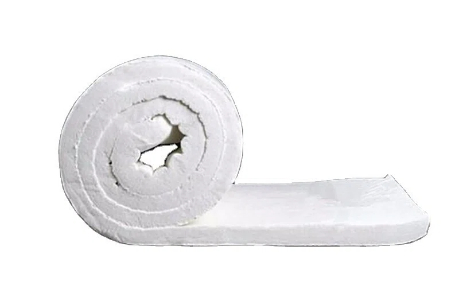
Ceramic wool, also called ceramic fiber wool or ceramic fiber insulation, is a lightweight refractory insulation material manufactured from inorganic fibers. Depending on its composition and product grade, it can be used in high-temperature environments where conventional building insulation is unsuitable.
However, two products described as ceramic wool may have different chemical compositions, temperature classifications, densities, thermal conductivity values, and mechanical properties. Selecting a product based on the material name alone does not establish whether it will perform reliably in a particular furnace.
Before requesting a quotation, buyers should establish five basic requirements:
The normal operating temperature and maximum temperature excursions.
The required continuous service temperature of the insulation.
The target cold-face temperature or permissible heat loss.
The available lining thickness and installation space.
The expected operating cycle, mechanical loading, and maintenance interval.
These factors provide a more reliable starting point than comparing unit prices or classification temperatures alone.
Classification temperature describes a material's performance under a specified laboratory heating procedure. It should not automatically be interpreted as the temperature at which the material can operate indefinitely in every installation.
For example, a ceramic fiber product classified at 1260°C does not necessarily mean that 1260°C is an appropriate continuous operating temperature for the finished lining. Long-term exposure, chemical atmosphere, gas velocity, thermal cycling, and the manufacturer's recommended service limits can affect its suitability.
Buyers should request both the classification temperature and the recommended continuous use temperature for the exact product being purchased.
The distinction is especially important in equipment that operates close to its upper temperature limit. A furnace may experience temperature overshoots during startup, production changes, burner adjustments, or abnormal operating conditions. A specification that considers only the normal setpoint may therefore underestimate the thermal demand placed on the insulation.
A practical selection process should confirm:
The normal and maximum anticipated hot-face temperatures.
The recommended continuous-use limit of the selected fiber.
The permissible temperature of anchors, backing materials, and adjacent components.
The expected dimensional change after prolonged heating.
The applicable safety and environmental requirements for the fiber chemistry.
A suitable grade must satisfy the complete operating envelope, not just one temperature figure.
Ceramic wool performance depends on the interaction between several material properties. Each should be assessed against the intended lining design.
Thermal conductivity
Thermal conductivity indicates how readily heat passes through a material. Lower conductivity can reduce heat transfer for a given thickness and temperature profile.
However, ceramic fiber conductivity changes with mean material temperature, density, composition, and test conditions. A value measured at a relatively low temperature should not be used uncritically to calculate performance in a high-temperature furnace.
Engineers should request conductivity data across the relevant temperature range and use those values in the thermal calculation.
Bulk density
Density affects the amount of material installed per unit volume, as well as heat storage, handling, compression behavior, and some aspects of thermal performance.
A higher-density product is not automatically the best choice. The correct density depends on the temperature profile, gas flow, mechanical requirements, lining configuration, and the manufacturer's product data.
Permanent linear change
Permanent linear change measures dimensional changes after a specified heating exposure. Excessive shrinkage can create gaps between lining sections, exposing the backup structure to additional heat.
The test temperature, holding time, and acceptance criteria must be stated when comparing results. Values from different test conditions should not be treated as directly equivalent.
Tensile strength and resilience
These properties influence handling, installation, and the ability of a flexible product to remain intact. They become particularly relevant where blankets are installed overhead, exposed to vibration, or subjected to movement during thermal cycling.
Shot content and fiber chemistry
Non-fibrous particles, commonly called shot, may affect product uniformity and certain installation or process requirements. Fiber chemistry also matters because different compositions have different temperature capabilities and occupational health classifications.
ISO 10635:1999 specifies test methods for ceramic fiber product properties including thickness, bulk density, resilience, permanent linear change on heating, thermal conductivity, tensile strength, and shot content. Buyers can use these test categories when preparing a technical purchasing specification.
The correct product format depends on the geometry of the furnace and the way the lining will be installed.
Ceramic wool blanket
Blankets are flexible and can be cut and layered to fit walls, roofs, doors, and other irregular surfaces. They are useful when the lining requires adaptable dimensions or when replacement sections need to be fitted around existing structures.
The installer must account for joint arrangement, attachment points, compression, and the manufacturer's recommended installation method.
Ceramic fiber board
Boards provide a more rigid form where shape retention and a relatively stable surface are required. Depending on the product design, they may be suitable for furnace doors, shaped sections, or other applications where a flexible blanket alone would not meet the structural requirements.
Their rigidity does not eliminate the need to evaluate thermal expansion, support, or exposure conditions.
Ceramic fiber modules
Modules are preassembled units designed to simplify installation across large lining areas. Their arrangement can help manage installation time and joint consistency when the furnace structure is designed for a modular system.
However, the anchoring method, module compression, joint layout, and substrate compatibility must be specified before installation.
The most economical format is therefore not necessarily the one with the lowest purchase price. Installation labor, cutting waste, shutdown time, and future replacement work should also be considered.
Insulation thickness should be calculated from the required thermal performance rather than selected from a standard thickness without checking the application.
The calculation needs to consider the hot-face temperature, ambient conditions, the desired cold-face temperature, and the temperature-dependent conductivity of the selected material. Surface heat transfer and the thermal properties of adjacent layers may also influence the result.
For multilayer furnace linings, engineers should assess the thermal resistance of each layer and the temperature at each interface. A backup insulation layer may provide additional thermal resistance, while a protective hot-face layer may be needed where direct exposure to flame, abrasion, or process gases would damage a fiber lining.
The design should also consider thermal bridges caused by metal anchors and gaps around doors, corners, and penetrations. These locations can transfer heat more readily than the surrounding insulated surface.
An appropriate thermal calculation helps determine whether a proposed thickness meets the project's heat-loss and surface-temperature requirements.
A useful supplier evaluation goes beyond a general product brochure. Procurement teams should request a consistent set of technical documents so that different products can be compared fairly.
| Evaluation item | What buyers should verify |
|---|---|
| Fiber classification | Exact composition and product grade |
| Temperature rating | Classification and recommended continuous-use temperature |
| Thermal performance | Conductivity values and test temperatures |
| Dimensional stability | Permanent linear change and test conditions |
| Density and dimensions | Tolerances and delivery specifications |
| Product format | Blanket, board, module, or another specified form |
| Quality documentation | Test reports, batch traceability, and applicable certificates |
| Installation support | Recommended anchors, joint design, and handling instructions |
Buyers should also confirm whether the quoted product is suitable for the actual atmosphere. Alkalis, certain metal oxides, process dust, and other contaminants can react with refractory fibers or alter their performance.
Where chemical exposure is significant, request written compatibility guidance instead of relying on a general statement that the material is chemically resistant.
Several purchasing mistakes can undermine an otherwise reasonable insulation budget.
First, selecting a product solely by its classification temperature may leave insufficient operating margin. Second, choosing a density or thickness without thermal calculations may increase costs without delivering the required performance. Third, ignoring shrinkage and joint design can lead to localized heat leakage even when the bulk insulation is appropriate.
A fourth mistake is failing to assess fiber-related occupational health requirements. Some refractory ceramic fiber types are subject to specific workplace controls or regulatory classifications. Buyers should evaluate the exact fiber chemistry and follow applicable local regulations, safety data sheets, and installation precautions.
Finally, procurement teams sometimes compare quotations with different specifications. A low-priced blanket may not be equivalent to a higher-priced product in fiber composition, dimensional tolerance, density, or tested performance.
A consistent technical specification makes the comparison more meaningful and reduces the risk of purchasing a material that does not meet the application's actual needs.
Can ceramic wool be used as the hot-face lining of a furnace?
Yes, when the selected product is specifically rated and designed for that exposure. Direct flame, high gas velocity, abrasion, and chemical attack may require a protective surface or a different lining configuration.
Is a higher-density ceramic wool blanket always better?
No. Density should be selected according to thermal conductivity, temperature, mechanical requirements, and installation design. A higher density may improve certain performance characteristics but can also increase material weight and cost.
How can buyers verify ceramic wool quality?
Request the technical datasheet, relevant test reports, product identification, dimensional tolerances, and batch documentation. Compare test results only when the testing methods and conditions are sufficiently consistent.
Can ceramic wool reduce furnace energy consumption?
It can reduce heat loss when the insulation system is correctly designed and installed. Actual energy savings depend on the original lining, operating schedule, furnace design, temperature profile, and other process conditions.
Which information should be included in a ceramic wool quotation request?
Provide the operating temperature, equipment type, required dimensions, preferred product format, installation conditions, quantity, and any applicable certification or compliance requirements.
Selecting furnace insulation requires a balance of thermal performance, dimensional stability, installation practicality, and operating safety. Shenzhou provides ceramic wool as part of its wider thermal insulation product portfolio. For product specifications, grade recommendations, and project quotations, contact qiu@shenzhoujt.cn with your operating temperature, equipment application, required dimensions, and preferred insulation format. These details help the technical team evaluate which product options may be appropriate for your project.