



Jul.01,2026
The global demand for Ceramic Wool Blankets continues to grow rapidly across high-temperature industries such as metallurgy, petrochemical processing, power generation, furnace engineering, and industrial kiln systems. As procurement teams move deeper into the selection and comparison stage, the focus is no longer only on price, but on thermal stability, insulation efficiency, installation flexibility, and long-term energy savings.
For industrial buyers in the mid-to-late procurement funnel, selecting the right Ceramic Wool Blankets is a critical decision that directly affects energy consumption, operational safety, and equipment lifespan.
Ceramic Wool Blankets are high-performance thermal insulation materials made from alumina-silica fibers designed to withstand extreme temperatures. They are widely used in industrial furnace linings, kiln insulation systems, and high-temperature pipeline protection.
In upstream supply chains, raw materials such as bauxite and kaolin are processed into ceramic fiber through high-temperature melting and fiberization technology. Downstream applications include steel plants, refineries, ceramic kilns, and power generation facilities.
In modern industrial insulation engineering, Ceramic Wool Blankets are considered a core material for energy-efficient thermal management systems.
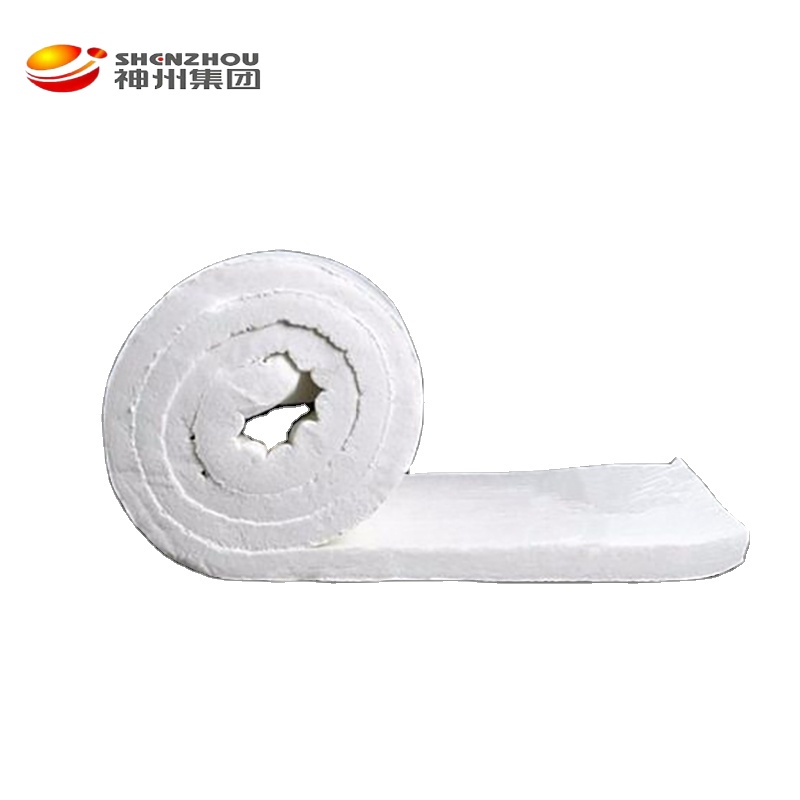
In procurement planning, Ceramic Wool Blankets are evaluated based on thermal resistance, density stability, installation efficiency, and energy-saving performance.
Buyers often ask: Why choose ceramic fiber insulation instead of traditional refractory bricks?
The answer is clear. Ceramic Wool Blankets offer lower thermal conductivity, faster installation, and significantly reduced energy loss compared to conventional refractory materials.
For manufacturers like Shenzhou, consistency in fiber density and temperature resistance is a key quality control benchmark.
When evaluating Ceramic Wool Blankets, procurement teams must focus on several critical technical parameters.
The most important factor is temperature resistance range, which determines suitability for different industrial furnace applications.
Thermal conductivity is another key indicator, directly impacting energy efficiency and heat retention performance.
Density and tensile strength affect mechanical stability during installation and long-term operation.
Advanced production methods such as spun fiber technology and needling reinforcement improve structural integrity and thermal performance.
When comparing insulation solutions, buyers often evaluate whether to choose Ceramic Wool Blankets or traditional refractory bricks.
Ceramic fiber blankets provide lightweight structure, faster installation, and higher thermal efficiency.
Refractory bricks offer structural rigidity but require longer installation time and higher energy consumption during heating cycles.
For modern industrial furnace systems, Ceramic Wool Blankets are increasingly preferred due to their energy-saving advantages and flexible application.
Ceramic Wool Blankets are widely used across multiple high-temperature industries.
In metallurgy, they are used for furnace wall insulation and heat containment systems.
In petrochemical plants, they provide thermal protection for reactors and pipelines.
In power generation facilities, they are used for boiler insulation and exhaust system heat management.
In ceramic and glass manufacturing, they are essential for kiln lining systems.
These applications require continuous high-temperature resistance and stable thermal performance.
Modern Ceramic Wool Blankets are designed for flexible installation in complex industrial environments.
They can be cut, layered, and shaped to fit furnace structures, pipelines, and irregular equipment surfaces.
In engineering projects, they are often combined with anchoring systems, ceramic coatings, and protective metal layers to improve durability.
Shenzhou provides engineered insulation solutions tailored for industrial furnace systems and high-temperature applications.
In procurement analysis, Ceramic Wool Blankets play a major role in reducing industrial energy consumption.
Their low thermal conductivity helps minimize heat loss, resulting in lower fuel consumption and operational cost savings.
Although initial material cost may be higher than traditional insulation, long-term ROI is significantly improved through energy efficiency and reduced maintenance cycles.
Selecting a reliable supplier is critical for industrial procurement success.
Buyers should evaluate production capacity, fiber consistency, temperature certification, and quality control systems.
A qualified supplier of Ceramic Wool Blankets should provide stable density control, high-temperature testing reports, and customized thickness options.
Shenzhou focuses on delivering industrial-grade insulation materials designed for global furnace and thermal engineering projects.
The Ceramic Wool Blankets industry is evolving toward ultra-low thermal conductivity materials, environmentally friendly production processes, and high-performance composite insulation systems.
Emerging trends include nano-fiber reinforcement, bio-soluble ceramic fibers, and hybrid insulation structures.
As global energy efficiency regulations become stricter, demand for advanced thermal insulation materials will continue to grow.
Ceramic Wool Blankets are essential materials in modern high-temperature industrial systems, offering superior insulation performance, energy efficiency, and installation flexibility. For procurement teams, selecting the right product requires careful evaluation of thermal performance, material stability, and supplier reliability.
With increasing global demand for energy-efficient industrial solutions, ceramic fiber insulation will remain a critical component in furnace and thermal system engineering.
Shenzhou provides reliable and high-performance ceramic fiber insulation solutions for industrial applications worldwide.
They are used for high-temperature insulation in furnaces, kilns, boilers, and industrial thermal systems.
Because they are lighter, easier to install, and offer better thermal efficiency.
Depending on grade, they can typically withstand 1260°C to 1430°C.
Yes, they are widely used in certified industrial thermal systems worldwide.
Email: qiu@shenzhoujt.cn