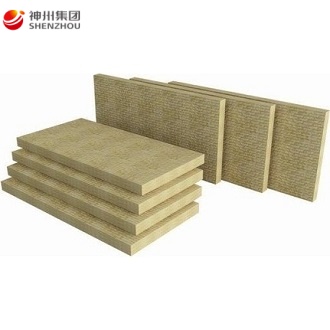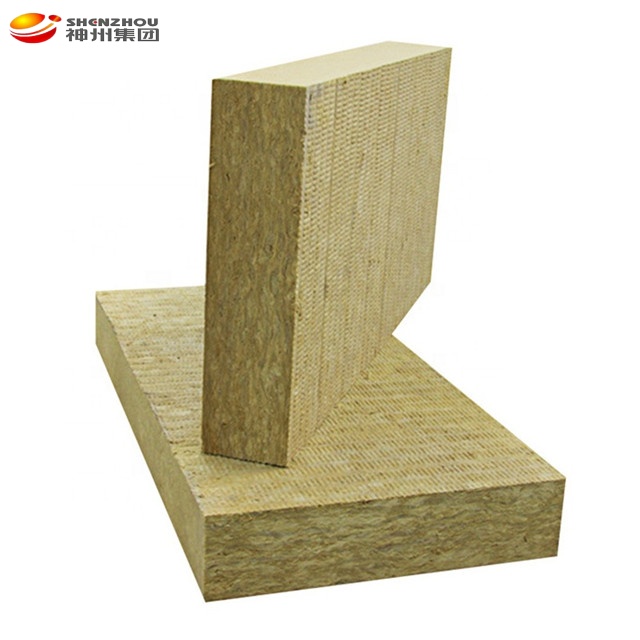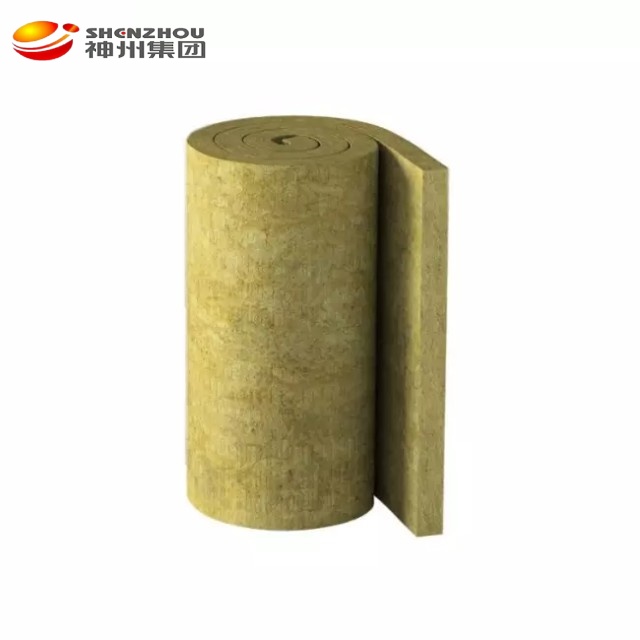




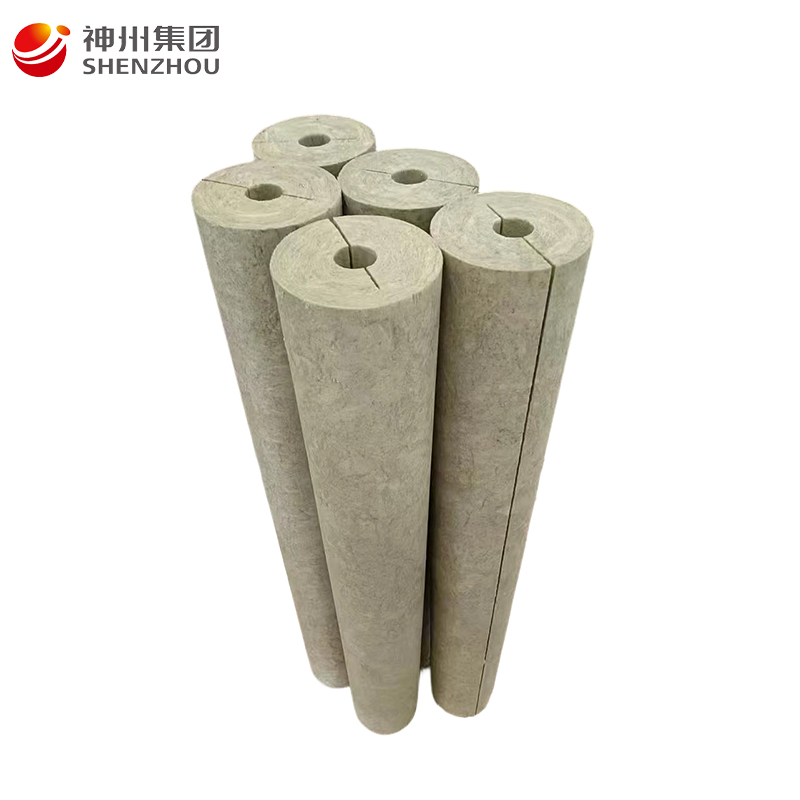
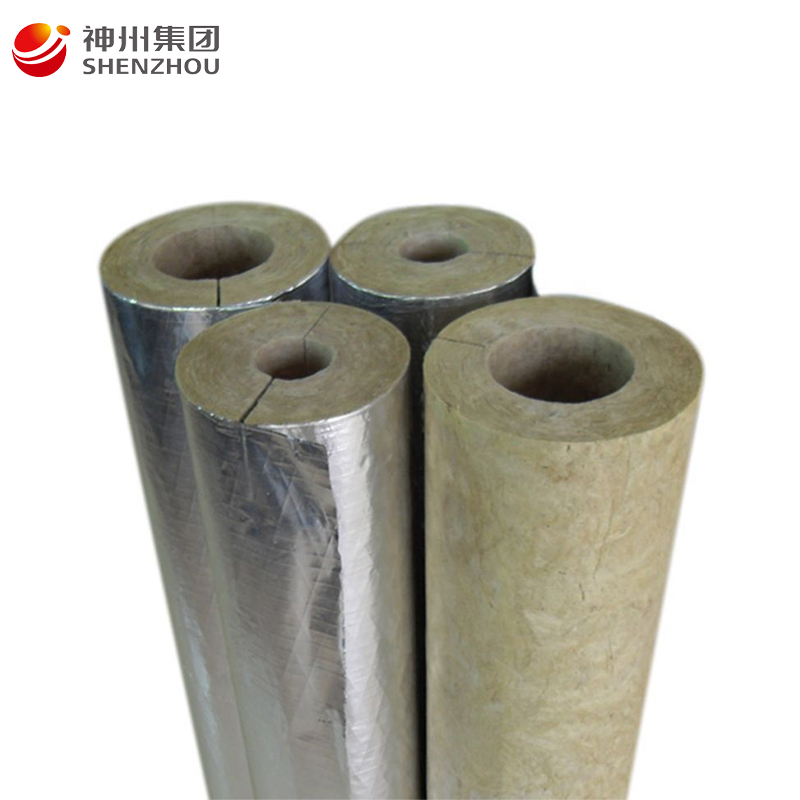


Rock Wool Pipe Cover Insulation is designed to reduce heat loss and heat gain in pipe systems while also providing effective acoustic insulation. By insulating pipework, it helps maintain water temperature for longer periods and improves overall energy efficiency. Installing insulation around pipes can reduce energy consumption and improve the performance of heating and hot water systems
Rock Wool Pipe Insulation offers excellent fire resistance with a melting point of approximately 1170°C. Compared with foam, fiberglass, and cellulose insulation materials that may burn at lower temperatures, rock wool remains stable under high heat conditions. It is widely used in fire protection applications, around chimneys and fireplaces, and in areas where exposed insulation is required.
Rock Wool Pipe Insulation also provides excellent resistance to water and moisture. It does not absorb water, rot, or support the growth of mildew, fungi, bacteria, or vermin. In addition, rock wool insulation maintains excellent dimensional stability over time. The material retains its shape effectively, ensuring a secure and reliable fit in different insulation applications.
As hot or cold water travels throughout a building, maintaining the required temperature is essential for system efficiency and performance. During circulation, pipes often pass through areas without additional heating or cooling, which can cause uninsulated pipes to lose or gain heat and reduce overall energy efficiency.
Different pipe systems require specific insulation performance levels:
Effective pipe insulation reduces the workload on HVAC systems, helping improve energy efficiency and lower operating costs.
Learn more about HVAC pipe insulation solutions and the advantages of rock wool insulation applications today.
Heating and cooling systems account for a significant portion of a building’s total energy consumption. Improving energy efficiency can help reduce both operating costs and carbon emissions in large buildings such as airports, apartment complexes, warehouses, and schools.
HVAC pipe insulation improves the efficiency of heating and cooling systems by helping maintain stable temperatures while reducing unnecessary energy loss. This allows systems to operate more effectively with lower energy consumption.
Fire resistance is another important benefit of pipe insulation, particularly for hot pipe systems operating at high temperatures throughout a building. Stone wool insulation provides excellent fire protection and helps improve overall building safety.
In addition, Rock Wool Pipe Insulation offers effective acoustic absorption, reducing noise from pipes and HVAC systems to create a more comfortable indoor environment for occupants.
Our stone wool pipe insulation material does not drop in performance levels over time.
We deliver a full range of solutions at all required thicknesses and dimensions, for both hot and cold water piping:
Benefits of SHENZHOU ROCKWOOL solutions include:
Rock Wool Insulation Materials Technical Data Sheet
|
Test items |
Units |
Performance Indicators |
Compliance Standards |
|
|
Combustion performance A (A1)Grade |
Heat of combustion |
MJ/kg |
≤2.0 |
GB/T 14402-2017 |
|
Mass loss rate |
% |
≤50 |
GB/T 5464-2010 |
|
|
Temperature rise in furnace |
℃ |
≤30 |
||
|
Sustained burning time |
s |
0 |
||
|
Tensile strength perpendicular to the surface |
KPa |
≥7.5 |
GB/T 30814-2014 |
|
|
Compression strength |
KPa |
≥40 |
GB/T 13480-2014 |
|
|
Acidity coefficient |
|
≥1.8 |
GB/T 5480-2017 |
|
Product Specifications
|
Specification |
Rock wool board |
Rock wool blanket |
Rock wool Pipe |
|
Density |
40 -200k |
40 -120k |
60 -180k |
|
Sizes |
1200 * 600mm |
3000 * 600mm |
- |
|
Thickness |
30-250mm |
50-100mm |
25-150mm |
Applications