



Sep.22,2026
For industrial equipment, insulation should be selected from the operating temperature, thermal conductivity, available space, moisture exposure, fire requirements and installation method, rather than from the material name alone. Shenzhou's current portfolio includes glass wool, rock wool, ceramic wool, rubber foam, XPS and aerogel, allowing different materials to be considered for different operating conditions.
There is no single material suitable for every industrial system.
A cold-water pipe, a high-temperature furnace and an outdoor equipment tank have very different insulation requirements. A procurement decision should begin with the operating environment and then identify the material that can meet those conditions.
A useful first screening is:
| Application condition | Important parameters |
|---|---|
| HVAC / chilled water | Thermal conductivity + vapor resistance |
| Hot water / steam piping | Service temperature + thermal conductivity |
| Furnace / kiln | Maximum temperature + material stability |
| Outdoor equipment | Moisture + UV + weather protection |
| Compact equipment | Thermal performance per unit thickness |
| Acoustic enclosure | Acoustic performance + thickness |
| Underground construction | Moisture + compressive performance |
Temperature is one of the first parameters to establish.
For example, Shenzhou's ceramic wool guide lists different grades with classification temperatures of 1260°C, 1430°C and 1600°C, depending on the fiber type. The same source lists ceramic wool densities from 64–160 kg/m³ for several grades.
This is fundamentally different from ordinary building insulation.
If equipment operates at a temperature substantially beyond the intended service range of the selected insulation, increasing the material thickness does not solve the underlying material limitation.
Maximum temperature and continuous operating temperature are not necessarily the same design condition.
An RFQ should therefore state:
For high-temperature industrial equipment, these values help the supplier determine whether ceramic wool, rock wool or another insulation system is appropriate.
They serve overlapping but different temperature ranges.
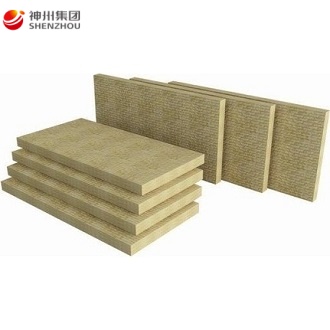
Shenzhou's published ceramic wool data includes grades up to 1600°C classification temperature, while its rock wool guide describes rock wool for building and industrial applications and lists rock wool products in board, blanket and pipe-section formats.
| Factor | Rock wool | Ceramic wool |
|---|---|---|
| Typical role | Building + industrial insulation | High-temperature industrial insulation |
| Published temperature information | Lower-temperature industrial applications | Up to 1600°C classification for PCW |
| Product forms | Board, blanket, pipe section | Blanket, board, module |
| Typical industrial use | Pipes, tanks, furnace casing | Furnaces, kilns, high-temperature equipment |
| Procurement priority | Fire + thermal + format | Temperature + thermal + grade |
The selection should be based on the actual operating temperature rather than simply choosing the material with the lowest quoted price.
Space constraints can change the material decision.
Aerogel is one example where thermal performance per unit thickness can become important. Shenzhou specifically positions aerogel insulation for industrial piping, process equipment, tanks, thermal-management systems and retrofit projects where installation space is restricted.
For procurement, the key comparison should therefore be:
Required thermal performance ÷ available insulation thickness
rather than simply comparing the price per kilogram.
Ask the supplier for:
Shenzhou's aerogel guidance specifically recommends evaluating these parameters and notes that industrial thermal conductivity should be assessed at the actual operating temperature rather than relying only on a room-temperature value.
For cold systems, moisture and vapor control become particularly important.
Shenzhou's rubber foam guide lists typical thermal conductivity of approximately 0.030–0.037 W/(m·K) and a water-vapor diffusion resistance factor of 10,000 or higher. Standard grades are described as covering approximately −40°C to +105°C, depending on the grade.
These specifications explain why rubber foam is used differently from high-temperature fibrous insulation.
For chilled-water procurement, buyers should therefore request:
Pipe diameter + fluid temperature + ambient temperature + humidity + required insulation thickness
rather than ordering insulation by pipe diameter alone.
Moisture can change the practical performance of an insulation system, particularly when the insulation is exposed to condensation or water ingress.
For rubber foam, the closed-cell structure provides high vapor resistance, while fibrous products may require appropriate facing, sealing or moisture protection depending on the application. Shenzhou specifies a vapor diffusion resistance factor of μ ≥10,000 for its rubber foam guide's benchmark.
The failure risk is not limited to visible water.
Poor moisture control can contribute to:
Therefore, moisture exposure should be included in the original procurement specification.
A practical comparison is more useful than a simple “which material is better” question.
| Project condition | Candidate material category | Main parameters to verify |
|---|---|---|
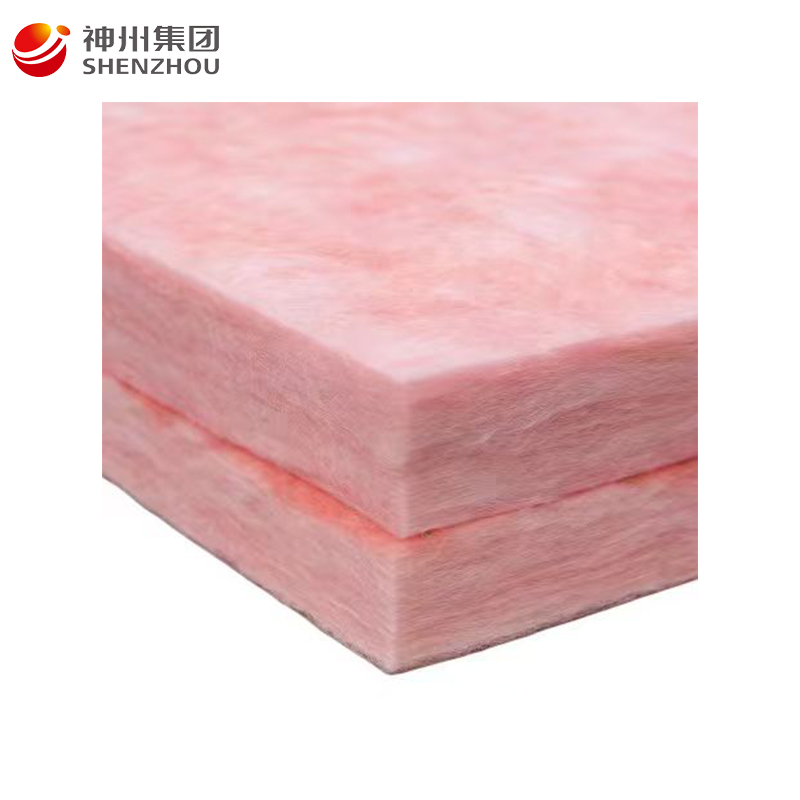
| Commercial wall/roof | Glass wool | λ, density, thickness, fire classification |
| HVAC duct | Glass wool / rubber foam | λ, moisture, format |
| Chilled-water pipe | Rubber foam | λ, vapor resistance, temperature |
| High-temperature furnace | Ceramic wool | Classification temperature, density |
| Industrial pipe | Rock wool / ceramic wool | Operating temperature, thickness |
| Limited installation space | Aerogel | λ at operating temperature, thickness |
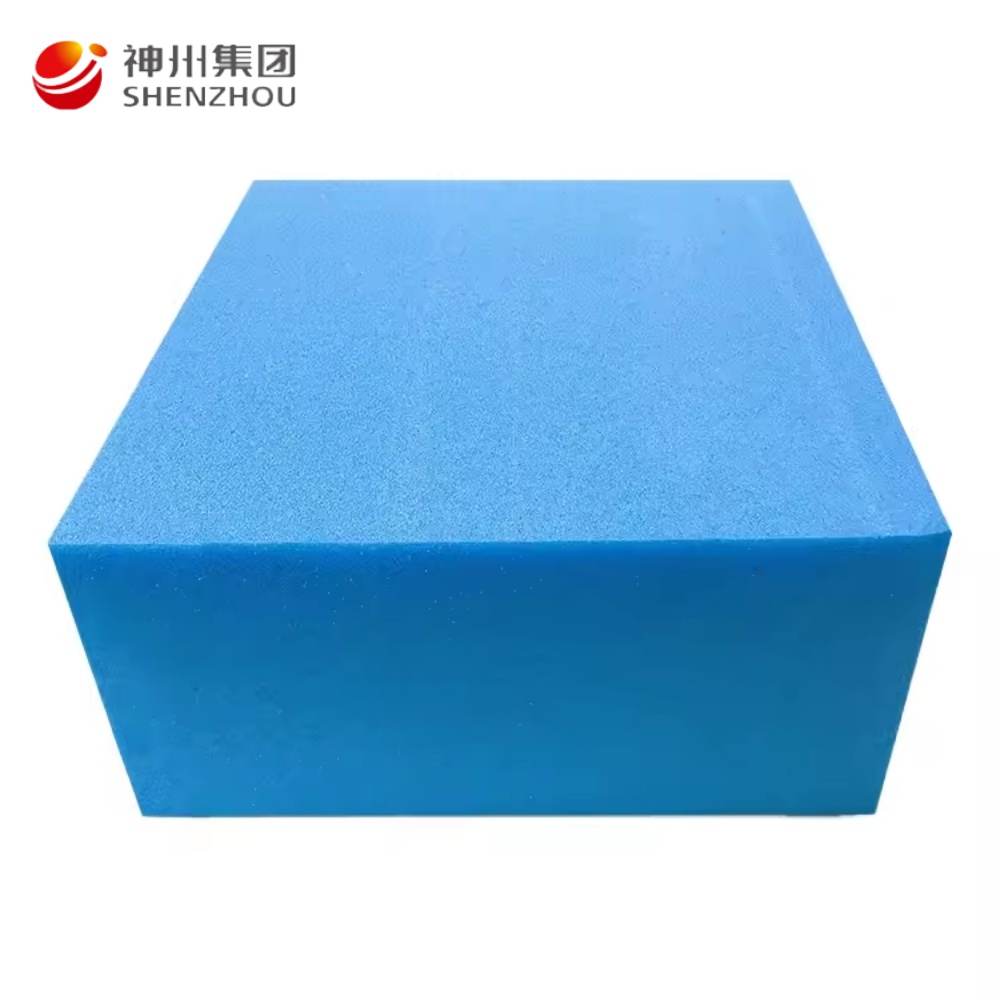
| Below-ground board insulation | XPS | Moisture + compressive requirements |
Shenzhou's portfolio includes all of these material categories, but the company itself notes that different products should be selected according to the specific application rather than treated as universal substitutes.
No.
A material with low thermal conductivity may still be unsuitable if it cannot meet the project's temperature, fire, moisture, mechanical or installation requirements.
For example, Shenzhou's rubber foam guide gives a thermal conductivity benchmark of approximately 0.032 W/(m·K) at 0°C, but the same product-selection guidance also identifies vapor resistance, operating temperature and fire rating as critical specifications.
Similarly, ceramic wool selection requires temperature-grade and density information rather than thermal conductivity alone.
A complete RFQ should include:
Providing this information allows the supplier to recommend a material based on actual operating conditions instead of making a selection from the product name alone.
There is no universal best material. The appropriate material depends on temperature, thermal requirements, moisture, fire performance, available space and installation conditions.
Start with the actual operating and maximum temperatures. Shenzhou's ceramic wool range includes grades with classification temperatures of 1260°C, 1430°C and 1600°C, making temperature-grade selection a key consideration for furnace and kiln applications.
Rubber foam is commonly used for chilled-water and refrigeration systems where condensation and vapor control are important. Shenzhou's published rubber foam data gives thermal conductivity of approximately 0.030–0.037 W/(m·K) and a water-vapor diffusion resistance factor of 10,000 or higher.
Aerogel should be considered when thermal requirements are demanding and available insulation space is limited. The selection should be based on thermal conductivity at the actual operating temperature, thickness, service temperature and project fire requirements.
Yes, rock wool pipe sections and blankets are used for industrial piping applications. Shenzhou lists rock wool pipe-section densities of 80–150 kg/m³ and identifies steam pipes, hot-water piping and industrial process pipes among the application areas.
Provide the equipment or pipe application, operating temperature, dimensions, required thickness, environmental conditions, quantity and project requirements. Shenzhou can then assess the appropriate material category and product configuration; its current portfolio includes glass wool, rock wool, rubber foam, ceramic wool, XPS and aerogel.
Industrial insulation should be selected according to the operating environment, not simply according to material popularity or unit price. Temperature, thermal conductivity, thickness, moisture exposure, fire performance and installation space all influence the final specification.
Shenzhou's portfolio covers several insulation technologies, from rubber foam with a published μ ≥10,000 vapor-resistance benchmark to ceramic wool grades reaching a 1600°C classification temperature, so buyers can match the material to the actual application rather than forcing one insulation type into every project.
Contact Shenzhou: qiu@shenzhoujt.cn
Website: www.shenzhougroup.com.cn

Previous:
None