



Jul.15,2026
Choosing the right insulation material is an important decision for construction projects, building energy efficiency, and industrial applications. Among rigid foam insulation materials, EPS and XPS foam insulation are two of the most widely used solutions.
Although both EPS (Expanded Polystyrene) and XPS (Extruded Polystyrene) are made from polystyrene, their manufacturing processes create differences in structure, moisture resistance, strength, thermal performance, and application areas.
For builders, contractors, and insulation material buyers, understanding the differences between EPS vs XPS foam insulation helps select the right solution based on project requirements, environmental conditions, and budget.
Expanded polystyrene (EPS) and extruded polystyrene (XPS) are both made from the same raw materials; the difference lies in the production process, which results in different densities. As XPS has a higher cell density, it offers greater compressive strength and better moisture resistance. However, in many cases EPS is the better choice, whilst in others XPS should be considered.
The production process for expanded polystyrene (EPS) involves heating or steaming foam beads within a mould to cause them to expand and fuse together. The production process for extruded polystyrene (XPS), on the other hand, involves extrusion moulding. Both EPS and XPS offer highly effective thermal insulation and excellent thermal conductivity. The specific choice of material depends on its intended application.
Shenzhou provides professional insulation material solutions, offering reliable foam products for construction, energy-saving buildings, and industrial applications.
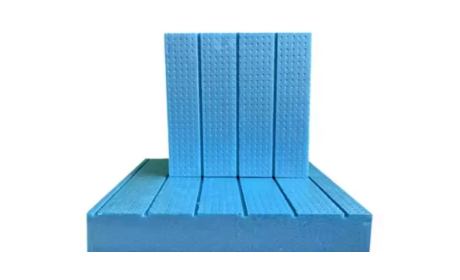
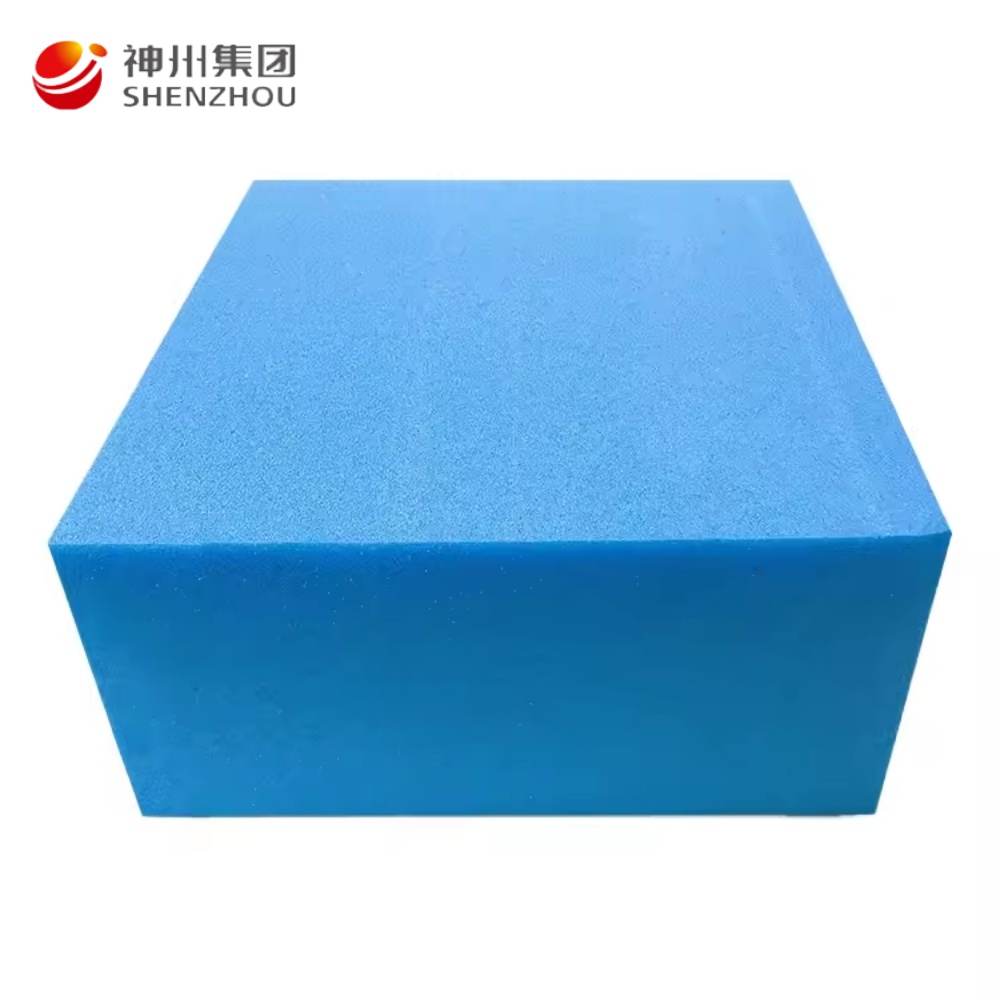
XPS Extruded Polystyrene Board
EPS (Expanded Polystyrene) foam insulation is a lightweight insulation material made by expanding polystyrene beads and molding them into rigid foam boards.
Its cellular structure provides thermal insulation while maintaining a lightweight design.
Key features of EPS foam include:
EPS foam insulation is commonly used in:
EPS is often selected for projects that require economical insulation solutions with reliable thermal performance.
XPS (Extruded Polystyrene) foam insulation is produced through an extrusion process that creates a more uniform closed-cell structure.
Compared with EPS, XPS generally provides stronger moisture resistance and higher compressive strength.
Key features include:
XPS foam insulation is commonly used for:
The closed-cell structure of XPS helps reduce water absorption and maintain insulation performance in demanding conditions.
The biggest difference between EPS and XPS comes from how they are produced.
EPS is produced by expanding small polystyrene beads with steam and molding them together.
This creates:
XPS is produced through extrusion, creating a continuous foam structure.
This results in:
The different manufacturing methods directly influence the final performance of each insulation type.
Thermal insulation performance is a key factor when selecting foam boards.
Advantages:
EPS provides reliable thermal protection for many residential and commercial projects.
Advantages:
XPS is often preferred where insulation performance must remain reliable under challenging conditions.
Moisture resistance is one of the most important differences between EPS and XPS.
EPS can provide good insulation performance, but its bead structure may allow greater moisture penetration compared with XPS.
Suitable applications:
XPS offers better moisture resistance because of its closed-cell structure.
Suitable applications:
For projects exposed to water or high humidity, XPS is often considered the better option.
Mechanical strength is another important consideration.
Advantages:
Advantages:
XPS is commonly selected for applications such as floors and foundations where insulation materials may experience pressure.
Budget is an important factor for many construction projects.
Advantages:
EPS is often preferred when cost efficiency is a priority.
Advantages:
Although XPS usually has a higher initial cost, it can provide additional value in applications requiring stronger moisture resistance and durability.
EPS is commonly used for exterior wall insulation because it provides:
XPS is usually preferred because of:
Both EPS and XPS can be used depending on:
XPS is often selected for roofs exposed to moisture or heavy loads.
XPS is commonly chosen for cold storage applications because insulation performance and moisture control are critical.
Before selecting insulation materials, consider:
Evaluate:
Wet environments usually require stronger moisture resistance.
Consider whether the insulation will be exposed to:
Higher-load applications may benefit from XPS.
EPS provides an economical solution for many standard insulation applications.
XPS may provide better long-term value for demanding environments.
Consider:
The right insulation choice can help improve building energy efficiency.
Lower upfront cost does not always mean lower lifecycle cost.
Selecting the wrong insulation type for wet environments may reduce performance.
Different projects require different levels of:
Insulation materials should be evaluated based on durability and expected service life.
Shenzhou provides professional insulation material solutions for construction and industrial applications.
With experience in insulation product manufacturing, Shenzhou focuses on delivering:
Whether a project requires EPS insulation for cost-effective building solutions or XPS insulation for high-performance applications, Shenzhou provides suitable insulation solutions to meet customer needs.
XPS offers advantages in moisture resistance and compressive strength, while EPS provides excellent cost efficiency and reliable insulation performance.
XPS is generally preferred for wet environments because its closed-cell structure provides better moisture resistance.
Yes. EPS is usually more economical and is widely used for large-scale insulation projects.
Yes. Both materials are widely used in construction, but the best choice depends on project conditions and performance requirements.
The choice between EPS vs XPS foam insulation depends on application requirements, environmental conditions, budget, and expected performance.
EPS provides a lightweight and cost-effective insulation solution for many standard construction projects.
XPS offers higher moisture resistance, stronger mechanical performance, and better suitability for demanding environments.
By selecting the right insulation material, builders can improve energy efficiency, durability, and long-term building performance.
Shenzhou provides reliable foam insulation solutions for modern construction and industrial applications.
Contact Shenzhou:
Email: qiu@shenzhoujt.cn

Previous:
None