



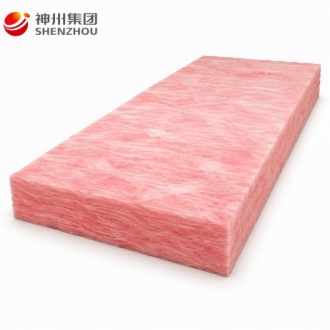
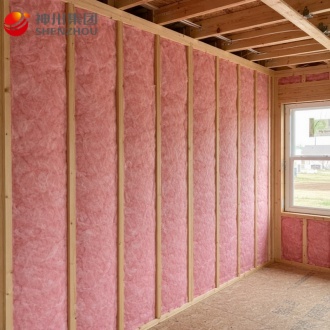


Our Pink Glass Wool Batt & Blanket Insulation is manufactured with an eco-friendly, formaldehyde-free acrylic binder and ultra-fine glass fibers, delivering excellent thermal insulation, acoustic performance, and fire resistance. Featuring low dust emissions, a soft-touch, skin-friendly structure, and reduced fiber shedding, it is ideal for residential, commercial, and industrial applications, including walls, roofs, ceilings, and HVAC systems. Available in customized R-values, thicknesses, dimensions, and facing options, the product features 1:4–1:5 high-compression vacuum packaging and a recovery rate of ≥95%, maximizing container loading efficiency and significantly reducing international shipping costs.
1.1 Official English Product Names & Model Taxonomy
To satisfy both B2C residential DIY search habits and B2B commercial procurement keywords, the following naming architecture and model codes are recommended for independent website taxonomy:
|
Form |
Official English Name |
Model Series |
Target Market |
|
Batt |
Pink Eco-Friendly Fiberglass Insulation Batt |
PGW-BT-Series |
USA / Canada |
|
Blanket/Roll |
Pink Thermal & Acoustic Glass Wool Blanket |
PGW-BL-Series |
Australia / NZ / USA |
|
Faced Batt |
Kraft-Faced / FSK-Faced Pink Insulation Batt |
PGW-FB-Series |
North America |
|
High-Density Board |
Semi-Rigid Pink Glass Wool Acoustic Board |
PGW-BD-Series |
Commercial HVAC & |
1.2 Material Composition, Fiber Structure & Eco-Binder Chemistry
• Core Material Composition : High-purity recycled borosilicate glass cullet (≥60%-80% post-consumer recycled content), high-grade silica sand, soda ash, dolomite, and limestone, melted at 1400°C–1450°C and spun via high-speed rotary centrifugal process into micro-fine inorganic fibers (diameter 4.0–6.0 μm).
• Pure Acrylic Binder System : Uses a thermosetting bio-based resin (plant-derived polycarboxy/polyol system) or 100% water-based acrylic resin. Completely eliminates formaldehyde, phenol, urea, and harsh chemical solvents (Zero Formaldehyde, Zero Phenol, No Harsh Ammonia Odor).
• Non-Itchy Micro-Fiber Architecture : Advanced fiber attenuation produces long, continuous, uniform fibers with no shot content (slag content < 0.2%), significantly reducing skin irritation and airborne fiber sheddingduring handling.
1.3 Core Differentiators & Competitive Advantage Matrix
How our Pink Eco-Fiberglass outperforms traditional yellow glass wool, rockwool, and spray foam on standalone sites:
|
Performance Metric |
Our Pink Batt/Blanket |
Traditional Yellow Glasswool |
Mineral Rockwool |
Spray Foam (SPF) |
|
Binder |
Acrylic |
Phenolic Resin |
Phenolic Resin |
Chemical Isocyanate |
|
Skin Sensation |
Soft-Touch, Non-Itchy |
High Itch & Prickly |
Rough & Prickly |
Chemical contact |
|
Dust & Shedding |
Ultra-Low Dust |
Moderate to High Dust |
Moderate Dust |
Fumes during curing |
|
Recovery Rate |
≥95% Instant |
80% - 90% Recovery |
Poor Compressibility |
N/A |
|
Container Load |
Maximized (1:4 to 1:5) |
Standard (1:2 to 1:3) |
1:1 Non-compressed |
Drums / Liquid |
|
Fire Rating |
Class A / Non-combustible |
Class A (ASTM E84) |
Class A1 / Non-combustible |
Combustible Class B/C |
1.4 Master Technical Data Sheet
Dual-unit technical specifications engineered for US, Canadian and Australian building standards compliance:
|
Technical Property |
Test Standard |
Imperial Value (US/CA) |
Metric Value (AU/Global) |
|
Thermal Conductivity |
ASTM C518 / ISO 8301 |
0.22 - 0.28 Btu·in/(hr·ft²·°F) |
0.032 - 0.040 W/(m·K) |
|
Thermal Resistance |
ASTM C665 / AS/NZS 4859.1 |
R-11, R-13, R-15, R-19, R-30, R-38 |
R1.5, R2.0, R2.5, R3.0, R4.0, R5.0 |
|
Density Range |
ASTM C167 / EN 1602 |
0.62 - 2.0 lb/ft³ |
10 - 32 kg/m³ |
|
Surface Burning |
ASTM E84 / UL 723 / CAN S102 |
Flame Spread: 0, Smoke Dev: 0-5 |
Class A (FSI ≤ 25, SDI ≤ 50) |
|
Combustibility |
ASTM E136 / AS 1530.1 |
Non-Combustible (Pass) |
Non-Combustible (Pass) |
|
Recovery Rate |
ASTM C167 / Factory Standard |
≥ 95% - 100% nominal thickness |
≥ 95% - 100% nominal thickness |
|
Water Vapor Sorption |
ASTM C1104 / AS/NZS 4859.1 |
< 1.0% by volume (at 120°F, 90% RH) |
< 0.2% by weight |
|
Corrosiveness |
ASTM C665 / C739 (Steel/Cu/Al) |
Pass (Non-corrosive to studs/pipes) |
Pass (无腐蚀反应) |
|
Fungi / Mold Resistance |
ASTM C1338 / ASTM G21 |
Zero growth (Rating 0 / Pass) |
No mold growth (Pass) |
|
Odor & VOC Emission |
ASTM C1304 / ASTM D5116 |
Zero Offensive Odor / No VOC |
GREENGUARD Gold Certified |
|
Acoustic NRC |
ASTM C423 (Type A Mounting) |
NRC 0.90 - 1.00 |
NRC 0.90 - 1.00 |
|
Operating Temperature |
ASTM C411 |
-40°F to +450°F (Unfaced) |
-40°C to +232°C (Unfaced) |
2.1 Primary Industries & Typical Architectural Placements
Designed for seamless cavity filling and overlay insulation across residential, commercial, industrial, and institutional buildings:
2.2 Environmental Limits & Critical Exclusion Scenarios
Crucial technical boundaries to protect buyers and provide transparent engineering guidance:
|
Operating Factor |
Acceptable Operating Range |
Exclusion Scenarios & Warnings |
|
Max Temperature |
Unfaced: up to 450°F (232°C) |
DO NOT install Kraft-faced insulation in direct contact with chimney flues, recessed lights (non-IC), or steam pipes. |
|
Water Immersion |
Tolerates high humidity (95% RH); |
DO NOT use below-grade exterior foundation walls or submerged water locations. Must not stay saturated. |
|
Load Bearing |
Non-load bearing (Friction-fit inside framing cavities) |
DO NOT use as under-slab or floor traffic insulation. Material is soft resilient fiber and will crush. |
|
UV & Weather Exposure |
Enclosed inside wall/ceiling assemblies behind gypsum or cladding |
DO NOT expose permanently to outdoor UV weathering. Must be protected by weather-resistant barriers (WRB). |
3.1 R-Value vs. Thickness Matching Matrix for US, CA & AU Climate Zones
The building codes in North America (IECC, ASHRAE 90.1, NBC Canada) and Australia (NCC Section J) mandate strict minimum thermal resistance values depending on the climate zone:
|
Market & Application |
Imperial R-Value |
Metric R-Value |
Nominal Thickness |
Standard Width |
|
US/CA 2x4 Wall Cavity |
R-11 Standard |
R1.9 - R2.6 |
3.5" (89 mm) |
15" (for 16" o.c.) |
|
US/CA 2x6 Wall Cavity |
R-19 Standard |
R3.3 - R3.7 |
6.25" (159 mm) |
15" or 23" Width |
|
US/CA Attic & Roof |
R-30 (Warm Climate) |
R5.3 |
9.5" (241 mm) |
16" / 24" Widths or |
|
AU/NZ Wall Cavity |
R-11 Equivalent |
R1.5 - R2.0 |
75 mm - 90 mm |
430 mm (450 o.c.) |
|
AU/NZ Ceiling & Roof |
R-19 to R-30 Equiv. |
R3.0, R3.5, R4.0, |
150 mm - 260 mm |
430 mm / 580 mm |
3.2 Facing Types & Vapor Retarder Selection Guide
4.1 Standard 5-Step Friction-Fit Installation Procedure
4.2 Common Site Installation Errors vs. Solutions
|
Common Installation Mistake |
Negative Impact on Performance |
Corrective Action / Best Practice |
|
Cavity Over-Compression |
Compressing a 6" R-19 batt into a 3.5" 2x4 cavity crushes air pockets and drops thermal performance to ~R-13. |
Always select the exact engineered cavity batt (e.g., 3.5" High-Density R-15 for 2x4 framing). |
|
Edge Gaps & Voids |
A 5% uninsulated gap area can degrade total wall thermal performance by up to 30%-40% due to convective loops. |
Cut batts 1/2" wider than the cavity to ensure snug, gap-free perimeter contact. |
|
Kraft Facing Left Exposed |
Kraft asphalt facing is combustible; exposed surface presents a fire hazard violating building codes. |
Must always be covered by 1/2" gypsum board or approved Class A fire barrier within 48 hours of installation. |
|
Tightly Crushing Over Wires |
Creates voids behind wires and thins the insulation over the conduit. |
Split the batt longitudinally: place half behind the wire and half in front for complete cavity encapsulation. |
5.1 International Certification Registry for North America & Australia
Authoritative third-party accreditation data required for municipal plan approvals, architectural specs, and insurance compliance:
|
Certificate / Document |
Standard & Test Method |
Scope & Criteria Achieved |
Jurisdiction / Status |
|
UL Classification (USA) |
ASTM E84 / UL 723 |
Flame Spread Index = 0 |
USA & Global |
|
ULC Listing (Canada) |
CAN/ULC-S702 & S102 |
Classified as Non-Combustible Core; |
Canada |
|
CodeMark Australia |
AS/NZS 4859.1:2018 |
Total R-Value certified across AU Climate Zones 1-8 |
Australia & NZ |
|
Combustibility Test |
AS 1530.1 / ASTM E136 |
Pass (Non-combustible core material; |
AU / NZ / USA |
|
UL GREENGUARD Gold |
UL 2818 / CDPH v1.2 |
Zero formaldehyde, low chemical off-gassing for schools & healthcare |
Global |
|
Acoustic Performance |
ASTM C423 / ISO 354 |
NRC 0.90 to 1.05 (Type A/E-400 Mounting, 50-100mm) |
Global |
|
Safety Data Sheet (SDS) |
OSHA HCS 2012 / GHS / WHMIS 2015 |
Non-hazardous classification; bio-based water-soluble binder |
USA / CA / AU |
Q1: What makes your Pink Eco-Glass Wool truly formaldehyde-free and non-itchy compared to standard market insulation?
A1: Our pink glass wool utilizes a 100% bio-based acrylic thermosetting binder derived from plant polyols, completely eliminating urea-formaldehyde and phenol compounds. Additionally, our high-speed rotary centrifugal spinning produces ultra-fine, continuous micro-fibers (4–6 μm) with zero slag content. This ensures a soft-touch, skin-friendly texture that minimizes airborne shedding and eliminates severe itching during handling.
Q2: How does the vacuum compression packaging work, and what is your guaranteed recovery rate?
A2: We use advanced hydraulic multi-stage vacuum compression technology, achieving a compression ratio up to 1:4 to 1:5. Due to the high tensile elasticity of our bio-acrylic bonded fibers, our batts and rolls achieve ≥95% instant nominal thickness recovery within 5–10 minutes after opening the poly wrap, even after 60–90 days of international ocean shipping. This maximizes container loading and slashes your ocean freight cost per unit.
Q3: What parameters must a buyer provide to receive an accurate and competitive FOB/CIF quotation?
A3: To receive our fastest turn-around engineering quotation within 12 hours, please provide:
1. Product Form: Batt (Pre-cut piece) or Blanket (Roll);
2. Required R-Value & Dimensions: e.g., R-13 (3.5" x 15" x 47") or Metric R2.0 (90mm x 430mm x 1160mm);
3. Facing Type: Unfaced, Kraft-Faced, or FSK-Faced;
4. Total Quantity: Target square feet / square meters or number of 40ft HQ containers;
5. Destination Port: For accurate CIF/DDP freight calculation.
Q4: Do your products comply with local building inspections in the US, Canada, and Australia?
A4: Yes. Our products hold valid UL Classification for the US (ASTM C665 / ASTM E84 Flame Spread 0, Smoke 0-5), CAN/ULC-S702 & S102 listing for Canada, AS/NZS 4859.1 certification for Australia, and UL GREENGUARD Gold indoor air quality certification. Every production batch comes with traceable mill test certificates.
Q5: What are your MOQ, Packaging Specifications, and Production Lead Times?
A5: • Minimum Order Quantity (MOQ): 1x40ft HQ container (approx. 45,000–60,000 sq.ft depending on thickness/R-value). Trial LCL orders available for standard sizes.
• Packaging: Heavy-duty UV-resistant polyethylene compression multi-packs with customized OEM private labeling and brand printing available.
• Lead Time: 10–14 business days for standard 40HQ container orders; 18–21 days for custom private label print orders.
Related Products