



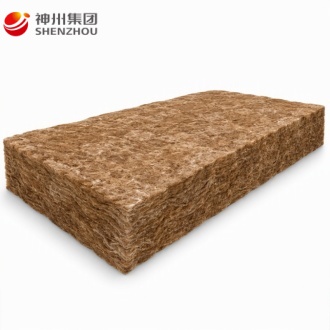
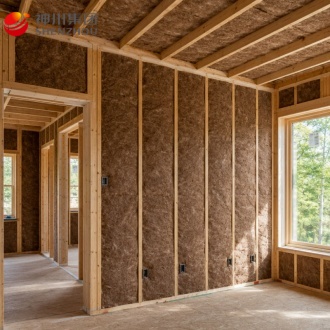


Our Brown Glass Wool Batt & Blanket Insulation is manufactured from high-purity recycled glass fibers and a bio-based binder, delivering excellent thermal insulation, sound absorption, and Class A fire performance. With a thermal conductivity of 0.032–0.040 W/(m·K), it is ideal for walls, roofs, ceilings, and HVAC systems in residential, commercial, and industrial buildings.
Available in customized R-values, thicknesses, dimensions, and facing options, the product features 1:4–1:5 high-compression vacuum packaging and recovers up to 95% of its nominal thickness within 5–10 minutes after unpacking. This helps maximize container loading efficiency and reduce international shipping costs while providing reliable insulation performance and excellent cost-effectiveness.
1.1 Official English Product Names & Model Taxonomy
Recommended bilingual nomenclature and model taxonomy for independent website product categorization:
Form |
Official English Name |
Model Series |
Target Market |
|
Batt |
Brown Glass Wool Thermal Insulation Batt |
BGW-BT-Series |
USA / Canada |
|
Blanket/Roll |
Brown Thermal & Acoustic Glass Wool Blanket |
BGW-BL-Series |
Australia / NZ / USA |
|
Faced Batt |
Kraft-Faced / FSK-Faced Brown Batt |
BGW-FB-Series |
North America |
|
Acoustic Board |
Semi-Rigid Brown Glass Wool Board |
BGW-BD-Series |
Commercial HVAC & |
1.2 Material Composition, Fiber Structure & Thermoset Binder
• Core Glass Fiber Material : High-purity borosilicate recycled glass cullet (≥65% post-consumer glass) combined with silica sand, soda ash, dolomite, and limestone, melted at 1400°C–1450°C and processed via rotary centrifugal spinner into uniform inorganic micro-fibers (fiber diameter 4.5–6.5 μm).
• Conventional bio based Binder : Utilizes industry-standard thermosetting phenolic/modified resin binder cured in high-temperature curing ovens. The polymer matrix cross-links to form high-tensile three-dimensional fiber bonds, giving the insulation its characteristic golden-brown/brown hue.
• 95% Verified Elastic Recovery: The thermoset cross-linked polymer network provides outstanding elastic resilience, ensuring that vacuum-compressed batts consistently achieve 95% nominal thickness recovery upon package decompression on job sites.
• Fire & Temperature Stability: Inorganic glass fibers provide natural incombustibility, meeting ASTM E84 Class A flame spread and AS 1530.1 non-combustibility criteria.
1.3 Product Comparison & Benchmark Matrix
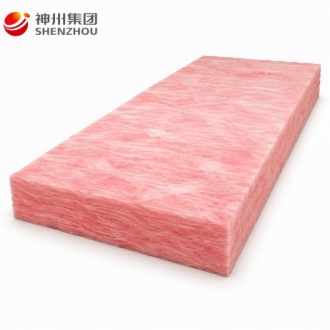
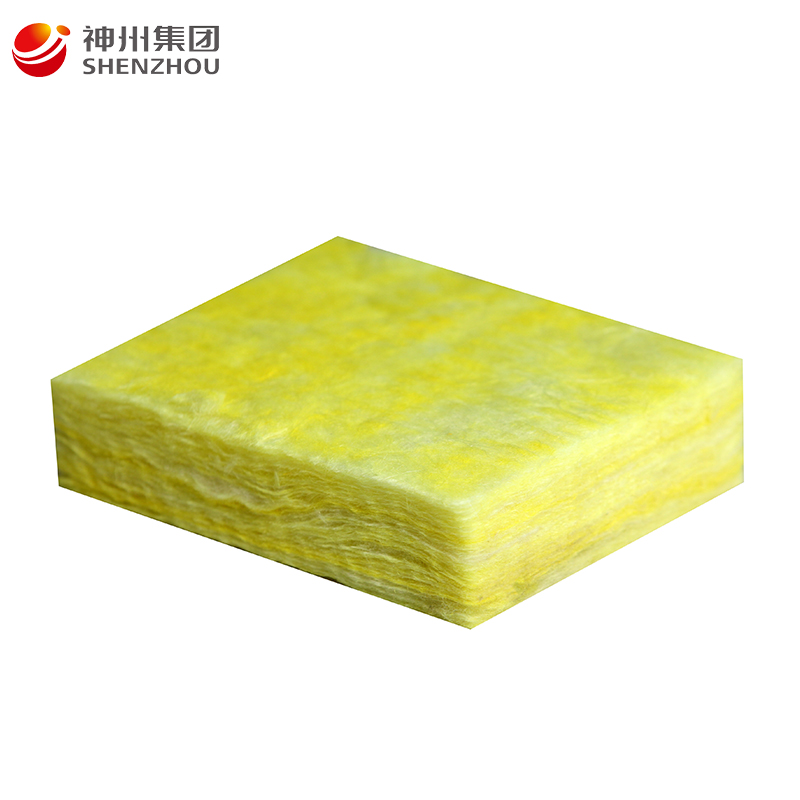
Comparison matrix illustrating Brown Glass Wool versus Pink Bio-Glass Wool and Traditional Yellow Glass Wool:
|
Performance Feature |
Brown Glass Wool |
Pink Glass Wool |
Standard Yellow Glass Wool |
|
Binder System |
Bid based binder |
Acrylic |
Phenolic Resin |
|
Product Color |
Golden Brown / Brown |
Signature Pink |
Light Yellow / Yellow |
|
Thickness Recovery |
95% Guaranteed Recovery |
≥95% - 100% Instant |
80% - 90% Recovery |
|
Thermal Performance |
0.032 - 0.040 W/(m·K) |
0.032 - 0.040 W/(m·K) |
0.034 - 0.042 W/(m·K) |
|
Fire Rating |
Class A / Non-combustible |
Class A / Non-combustible |
Class A |
|
Cost & Value |
High Cost-Performance |
Premium Eco Grade |
Standard Commercial |
1.4 Master Technical Data Sheet
Dual-unit technical specifications for US, Canadian, and Australian building engineering compliance:
|
Technical Property |
Test Standard |
Imperial Value (US/CA) |
Metric Value (AU/Global) |
|
Thermal Conductivity |
ASTM C518 / ISO 8301 |
0.22 - 0.28 Btu·in/(hr·ft²·°F) |
0.032 - 0.040 W/(m·K) |
|
Thermal Resistance |
ASTM C665 / AS/NZS 4859.1 |
R-11, R-13, R-15, R-19, R-30, R-38 |
R1.5, R2.0, R2.5, R3.0, R4.0, R5.0 |
|
Density Range |
ASTM C167 / EN 1602 |
0.62 - 2.0 lb/ft³ |
10 - 32 kg/m³ |
|
Surface Burning |
ASTM E84 / UL 723 / CAN S102 |
Flame Spread: 0, Smoke Dev: 0-5 |
Class A (FSI ≤ 25, SDI ≤ 50) |
|
Combustibility |
ASTM E136 / AS 1530.1 |
Non-Combustible (Pass) |
Non-Combustible (Pass) |
|
Thickness Recovery Rate |
ASTM C167 / Factory Standard |
95% of nominal thickness |
95% of nominal thickness (标称厚度95%) |
|
Water Vapor Sorption |
ASTM C1104 / AS/NZS 4859.1 |
< 1.0% by volume (@ 120°F, 90% RH) |
< 0.2% by weight |
|
Corrosiveness |
ASTM C665 / C739 (Steel/Cu/Al) |
Pass (Non-corrosive to studs/pipes) |
Pass |
|
Fungi / Mold Resistance |
ASTM C1338 / ASTM G21 |
Zero growth (Rating 0 / Pass) |
No mold growth |
|
Acoustic NRC |
ASTM C423 (Type A Mounting) |
NRC 0.90 - 1.00 |
NRC 0.90 - 1.00 |
|
Operating Temperature |
ASTM C411 |
-40°F to +450°F (Unfaced) |
-40°C to +232°C (Unfaced) |
2.1 Core Architectural & Engineering Applications
2.2 Environmental Limits & Critical Exclusion Scenarios
|
Operating Factor |
Acceptable Operating Range |
Exclusion Scenarios & Warnings |
|
Max Temperature |
Unfaced: up to 450°F (232°C) |
DO NOT install Kraft-faced batts in direct contact with chimney flues, non-IC rated recessed lighting, or steam pipes. |
|
Water & Moisture |
Tolerates high relative humidity (95% RH); |
DO NOT use in submerged water conditions or below-grade exterior foundation walls. Must not remain constantly saturated. |
|
Load Bearing |
Non-load bearing (Engineered for friction-fit cavity insertion) |
DO NOT install under floor concrete slabs or areas subject to heavy foot/mechanical traffic. |
|
Outdoor UV Exposure |
Enclosed behind gypsum board or approved exterior sheathing/siding |
DO NOT leave permanently exposed to direct outdoor sunlight/weathering. Must be shielded by building envelope. |
3.1 R-Value vs. Thickness Matching Matrix for US, CA & AU Climate Zones
Matching guide complying with North American IECC / NBC and Australian NCC Section J energy efficiency codes:
|
Market & Application |
Imperial R-Value |
Metric R-Value |
Nominal Thickness |
Standard Width |
|
US/CA 2x4 Wall Cavity |
R-11 Standard |
R1.9 - R2.6 |
3.5" (89 mm) |
15" (for 16" o.c.) |
|
US/CA 2x6 Wall Cavity |
R-19 Standard |
R3.3 - R3.7 |
6.25" (159 mm) |
15" or 23" Width |
|
US/CA Attic & Roof |
R-30 (Warm Climate) |
R5.3 |
9.5" (241 mm) |
16" / 24" Widths or |
|
AU/NZ Wall Cavity |
R-11 Equivalent |
R1.5 - R2.0 |
75 mm - 90 mm |
430 mm (450 o.c.) |
|
AU/NZ Ceiling & Roof |
R-19 to R-30 Equiv. |
R3.0, R3.5, R4.0, |
150 mm - 260 mm |
430 mm / 580 mm |
3.2 Facing Types & Vapor Retarder Selection
4.1 Standard 5-Step Friction-Fit Installation Procedure
4.2 Job-Site Installation Errors vs. Solutions
|
Common Installation Mistake |
Negative Impact on Performance |
Corrective Action / Best Practice |
|
Over-Compressing Thick Batts |
Compressing 6" R-19 into a 3.5" 2x4 cavity crushes air pockets, reducing thermal value to ~R-13. |
Always choose the proper engineered cavity thickness (e.g., 3.5" R-13 or R-15 for 2x4 studs). |
|
Edge Gaps & Unfilled Voids |
A 5% unfilled gap area can reduce overall wall effective thermal performance by up to 30%-40%. |
Ensure batts are cut snug and edges touch studs completely without voids. |
|
Kraft Facing Left Exposed |
Asphalt-coated Kraft paper is combustible; leaving it exposed violates fire safety codes. |
Must always be covered by 1/2" gypsum board or approved Class A fire barrier within 48 hours. |
|
Crushing Over Pipes/Wires |
Creates thermal voids behind pipes and thins insulation at the front. |
Split the batt longitudinally: half behind wire/pipe, half in front for full cavity encapsulation. |
5.1 International Certification Registry for North America & Australia
|
Certificate / Document |
Standard & Test Method |
Scope & Criteria Achieved |
Jurisdiction / Status |
|
UL Classification (USA) |
ASTM E84 / UL 723 |
Flame Spread Index = 0 |
USA & Global |
|
ULC Listing (Canada) |
CAN/ULC-S702 & S102 |
Classified as Non-Combustible Core; |
Canada |
|
Australia |
AS/NZS 4859.1:2018 |
Total R-Value certified across AU Climate Zones 1-8 |
Australia & NZ |
Q1: What is Brown Glass Wool, and how does its binder system work?
A1: Brown Glass Wool is a high-performance thermal and acoustic insulation made from pure inorganic glass fibers bonded with an bio-based binder. It has no formaldehyde and eco-friendly. It delivers reliable thermal performance, Class A fire safety, and excellent cost efficiency.
Q2: How does the vacuum compression packaging work, and what is the recovery rate?
A2: We use advanced hydraulic multi-stage vacuum compression packaging with a compression ratio of 1:4 to 1:5. Due to the high elastic tensile structure of our cured glass wool fibers, our batts and rolls consistently achieve a 95% nominal thickness recovery rate within 5–10 minutes after opening the package on site, ensuring no loss in design R-value while significantly reducing ocean container shipping costs.
Q3: What parameters must a buyer provide to receive an accurate FOB/CIF quotation?
A3: To receive an accurate quotation within 12 hours, please provide:
1. Product Form: Batt (Pre-cut) or Blanket (Roll);
2. Required R-Value & Exact Dimensions: e.g., R-13 (3.5" x 15" x 47") or Metric R2.0 (90mm x 430mm x 1160mm);
3. Facing Type: Unfaced, Kraft-Faced, or FSK-Faced;
4. Total Quantity: Target square feet / square meters or number of 40ft HQ containers;
5. Destination Port: For accurate CIF/DDP freight calculation.
Q4: Do your brown glass wool products comply with local building inspections in the US, Canada, and Australia?
A4: Yes. Our products hold valid UL Classification for the US (ASTM C665 / ASTM E84 Flame Spread 0, Smoke 0-5), CAN/ULC-S702 & S102 listing for Canada, and AS/NZS 4859.1 / AS 1530.1 compliance for Australia and New Zealand. Factory mill test certificates and full TDS sheets are provided with each container shipment.
Q5: What are the MOQ, Packaging, and Production Lead Times?
A5: • Minimum Order Quantity (MOQ): 1x40ft HQ container (approx. 45,000–60,000 sq.ft depending on thickness/R-value). LCL trial orders available for standard sizes.
• Packaging: Heavy-duty UV-resistant polyethylene compression multi-packs with optional OEM private label printing.
• Lead Time: 10–14 business days for standard container orders; 18–21 days for custom private label print orders.
Related Products